(Updated 9 July 2026)
Ebola disease: Symptoms, transmission, and response to the outbreak
Ebola is a rare but deadly viral disease that can spread rapidly and overwhelm fragile health systems. Outbreaks can place enormous pressure on patients, families, and health systems, especially in communities already affected by conflict or displacement.
What you need to know about the latest outbreak
The latest Ebola disease outbreak in the Democratic Republic of Congo (DRC) was declared by the Ministry of Health on 15 May 2026. On 17 May, the World Health Organisation (WHO) declared a public health emergency of international concern.
This outbreak was identified following alerts of unusual deaths in the northwest of Bunia, the capital of Ituri province in the DRC. The outbreak has spread fast, in an area of extreme insecurity. Over a month after the declaration, and despite significant efforts to scale up the response, the outbreak remains a real public health emergency.
More than 1400 Doctors Without Borders staff are responding to this Ebola disease outbreak in the DRC. Our teams are running Ebola Treatment Centres across affected areas in Ituri, North Kivu, and South Kivu.
DRC: Based on official data from the INRB toll, there are 1,708 confirmed cases, 580 confirmed deaths and 280 survivors as of 6 July. You can refer to the following for the updated numbers link.
Uganda: 20 confirmed cases.
Bundibugyo virus: Why this Ebola disease outbreak is different
Unlike most previous Ebola disease outbreaks that occurred in the DRC, this one is caused by the Bundibugyo virus. Currently, there is no approved vaccine or specific treatment for the Bundibugyo virus.
Diagnosis of Bundibugyo virus requires virus‑specific PCR testing performed in laboratories with stringent biosafety. Currently, there is a shortage of Bundibugyo virus–specific test kits, and rapid decentralised testing will take time and effort to establish.
John Johnson, medical lead for epidemic response, shares what we know about the unfolding crisis in the DRC and Uganda.
Doctors Without Borders’ response to the outbreak
Doctors Without Borders teams are working around the clock on a large-scale response in DRC, in collaboration with the Congolese health authorities, WHO, and partners. More than 1400 Doctors Without Borders staff are responding to the outbreak.
Doctors Without Borders is running Ebola Treatment Centres across affected areas in Ituri, North Kivu, and South Kivu.
Since the beginning of Doctors Without Borders' response until 03 July, 843 patients were admitted to Doctors Without Borders’ ETCs in Ituri, North Kivu and South Kivu, including 357 confirmed Ebola cases and 116 survivors. More than 90% of these patients were admitted in Mongbwalu and Bunia ETCs.
Doctors Without Borders currently has a capacity of more than 430 beds within its ETCs and isolation units put in place across Ituri, North Kivu and South Kivu Provinces.
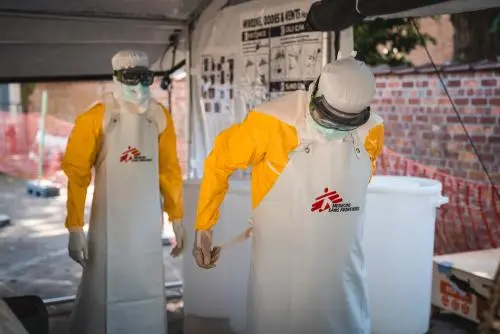
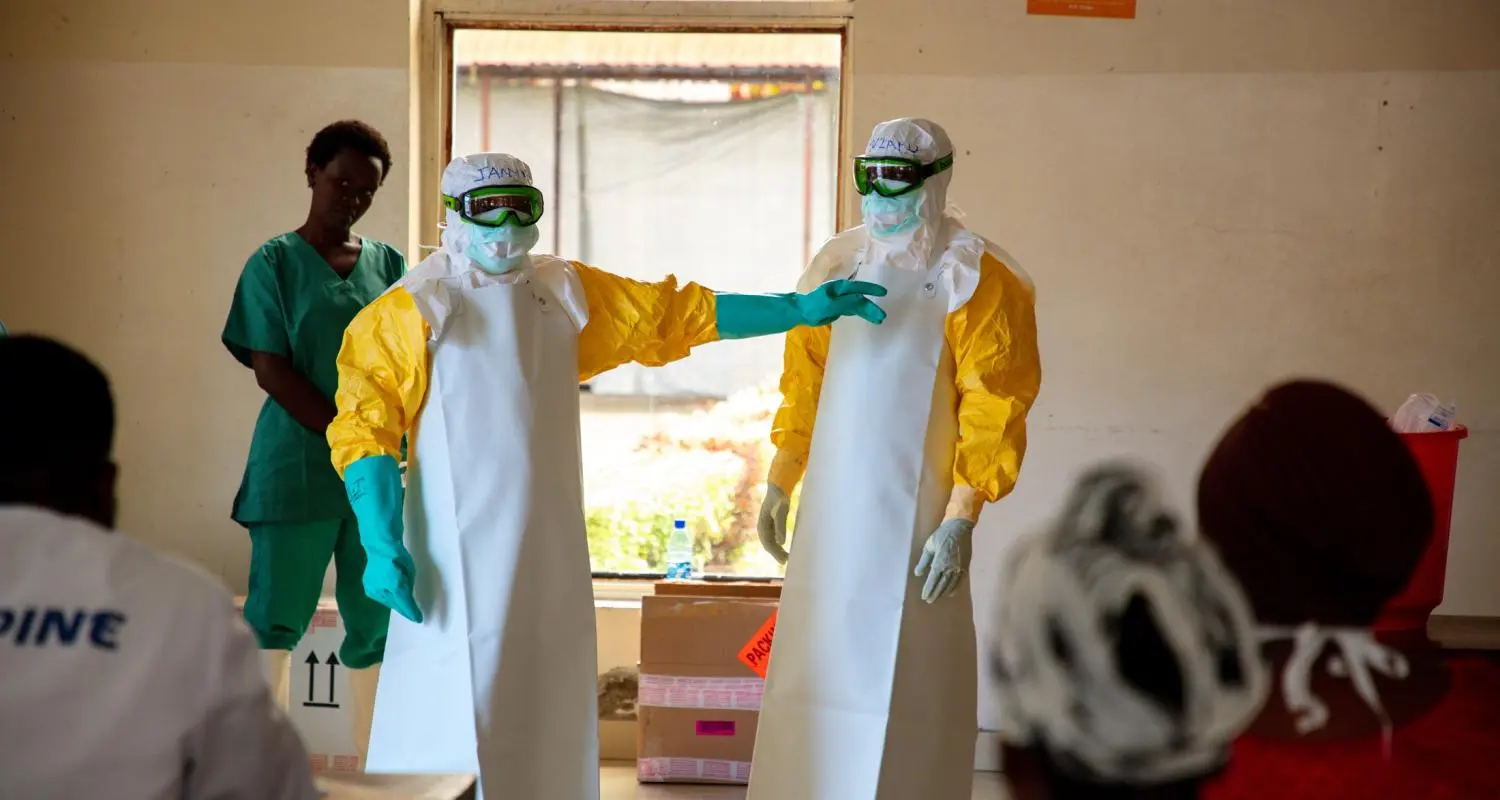
In the first month following the declaration of the outbreak alone, Doctors Without Borders sent tens of thousands of items to strengthen the response capacity. This includes Ebola kits containing medicines, disinfectants, and hygiene materials, as well as personal protective equipment (PPE) such as gloves, masks, goggles, gowns, and protective boots to help ensure the safety of healthcare workers. Several tonnes of medical and logistical supplies continue to arrive in the DRC each week from Doctors Without Borders’ international logistics hubs.
- How is Doctors Without Borders responding?
Doctors Without Borders’ Ebola outbreak response is structured around the following pillars:
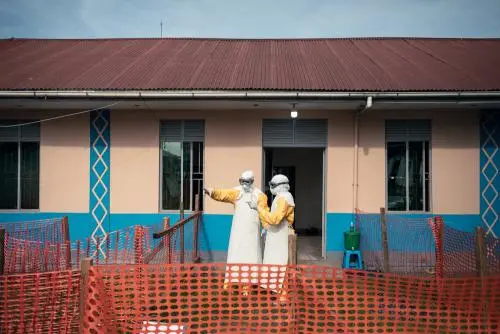
- Treatment and Care: In areas where suspected or confirmed Ebola cases have been reported, Doctors Without Borders is setting up and operating Ebola Treatment Centres (ETCs) to provide specialised care and contain the spread of the disease.
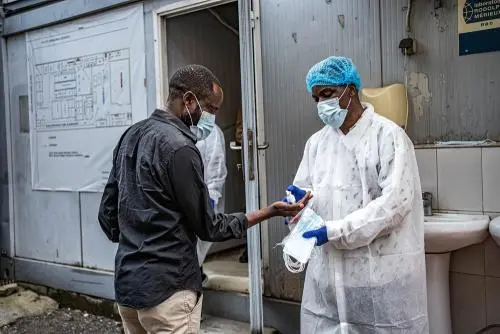
- Isolation and Triage: Our teams are establishing isolation units and triage systems within health facilities to ensure safe patient flow, support the early detection and isolation of suspected Ebola cases, and enable the safe continuation of other essential healthcare services.
- Prevention: Doctors Without Borders is reinforcing infection prevention and control (IPC) measures in many health facilities by providing training to healthcare workers on infection prevention and control (IPC) measures, the management of suspected Ebola cases and on the safe provision of other essential services, such as maternity care, malnutrition treatment, and trauma care in an Ebola context.
- Surveillance and Detection: Our teams are working closely with community leaders and local health authorities to strengthen surveillance and early detection systems. This includes engaging community leaders to report unusual health events, establishing toll-free alert lines where they do not already exist, and strengthening reporting mechanisms within health facilities to ensure timely identification and notification of suspected cases.
- Treatment and Care: In areas where suspected or confirmed Ebola cases have been reported, Doctors Without Borders is setting up and operating Ebola Treatment Centres (ETCs) to provide specialised care and contain the spread of the disease.
- Doctors Without Borders' response in DRC
Doctors Without Borders has launched a large-scale response in DRC, mobilising teams of medical, logistical, and support staff with experience working in previous Ebola disease outbreaks. Examples of our current activities include:
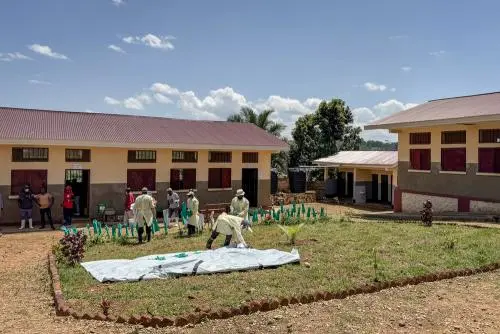
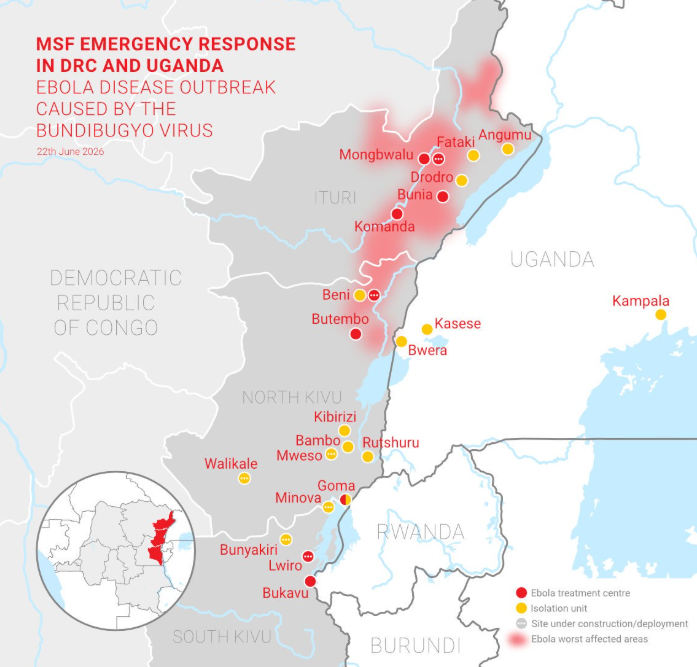
- Ituri province: In Mongbwalu, Doctors Without Borders runs a 66-bed Ebola Treatment Centre (ETC) within the General Referral Hospital of Mongbwalu, setting up a separate 65-bed ETC, and supporting safe and dignified burials. In Bunia, our teams operate an 80-bed Ebola treatment centre at Elikya Hospital Center, which is running at full capacity (the capacity will be 100 beds by early July). In Komanda, our teams operate a 16-bed ETC. We are also strengthening isolation spaces in health facilities and internally displaced sites in Fataki, Drodro and Angumu.
- North Kivu province: In Goma, Doctors Without Borders operates a 40-bed ETC in Munigi, with a maximum capacity of 72 beds, and supports isolation and patient care at Kyeshero General Referral Hospital. In Butembo, our teams operate an 18-bed capacity ETC nearby Kitatumba hospital. In Beni, we are supporting Beni’s General Referral Hospital to reinforce and increase the isolation capacity to 10 beds. In Rutshuru, Mweso, Walikale, and surrounding areas, our teams are establishing isolation units in hospitals and integrating Ebola preparedness into existing services to enable the safe continuation of other essential health care.
- South Kivu province: Doctors Without Borders operates a 16-bed ETC in Bukavu and a 35-bed ETC in Lwiro. In Minova, and Bunyakiri, our teams are establishing isolation units and reinforcing preparedness measures in Doctors Without Borders-supported health facilities.
- Ituri province: In Mongbwalu, Doctors Without Borders runs a 66-bed Ebola Treatment Centre (ETC) within the General Referral Hospital of Mongbwalu, setting up a separate 65-bed ETC, and supporting safe and dignified burials. In Bunia, our teams operate an 80-bed Ebola treatment centre at Elikya Hospital Center, which is running at full capacity (the capacity will be 100 beds by early July). In Komanda, our teams operate a 16-bed ETC. We are also strengthening isolation spaces in health facilities and internally displaced sites in Fataki, Drodro and Angumu.
- Doctors Without Borders' response in Uganda
Doctors Without Borders has supported responses to previous outbreaks of Ebola disease in Uganda — caring for sick patients, setting up Ebola treatment units, and improving infection prevention and control measures. Examples of our current activities include:
- Kampala: Doctors Without Borders rehabilitated a 32-bed Ebola Treatment Unit in Mulago, Kampala, immediately after the outbreak was declared.
- Bwera: Our teams renovated a 14-bed isolation centre. We are also training staff at the general hospital and will support the facility’s day-to-day functions.
- Arua: Doctors Without Borders has sent a team to Arua, a northeastern city less than 12 miles from the border with DRC, to assess the needs. We will soon start training health staff and providing donations to the city’s hospital. Our teams are also stepping up infection prevention and control measures and supporting isolation capacity for suspected cases in facilities where we are already present.
Doctors Without Borders remains in close contact with the Ugandan Ministry of Health to increase its response if needed.
- Kampala: Doctors Without Borders rehabilitated a 32-bed Ebola Treatment Unit in Mulago, Kampala, immediately after the outbreak was declared.
Doctors Without Borders is also reinforcing prevention measures across its existing healthcare projects to help ensure continued access to safe medical care during the outbreak.
Doctors Without Borders has responded to multiple Ebola outbreaks in the DRC over the past years. This outbreak marks the country’s seventeenth since the first case was discovered in 1976.
Will you support our emergency response work?
Help us provide lifesaving medical care during emergencies by making a donation today.
- What is Ebola?
Ebola disease is an infectious viral haemorrhagic fever. It is a disease caused by any virus within the genus of Orthoebolavirus. The disease takes its name from the Ebola River, located in northern Democratic Republic of the Congo (DRC), where the virus was first detected in 1976.
The most commonly known viruses within this genus are Ebola virus, Sudan virus and Bundibugyo virus.
- How is Ebola transmitted?
Ebola spreads through direct contact with the blood, secretions, or other bodily fluids of an infected person. However, the virus is not airborne or waterborne.
During an outbreak, Ebola can spread rapidly within healthcare facilities if strict infection prevention and control measures are not in place. Proper infection control in health centres is therefore essential to protect patients, caregivers, and health workers.
Healthcare workers caring for Ebola patients must wear personal protective equipment (PPE). Protective equipment is also required during safe and dignified burials, as the virus can still be transmitted through contact with the bodies of people who have died from the disease.
- What are the symptoms of Ebola?
Early symptoms of Ebola can resemble other infectious diseases and may include:
- Sudden fever
- Fatigue
- Muscle pain
- Headache
- Sore throat
As the disease progresses, symptoms may include:
- Vomiting and diarrhoea
- Rash
- Kidney and liver complications
- Internal and external bleeding in some cases
- How are Ebola outbreaks prevented and controlled?
Rapid action is essential to contain the outbreak and prevent further spread. An effective Ebola response must prioritise both patient care and the needs of affected communities.
Key measures used to control Ebola outbreaks include:
- Care and isolation of patients to reduce transmission and improve survival rates;
- Community engagement and health promotion to help people understand how Ebola spreads and encourage participation in response efforts;
- Safe and dignified burials and environmental decontamination, including disinfecting the homes of infected patients;
- Surveillance in affected and high-risk communities to detect suspected cases early;
- Contact tracing to identify, monitor, and test people who may have been exposed to the virus;
- Support for healthcare facilities to strengthen infection prevention and control and ensure patients are safely referred for treatment; and
- Vaccination campaigns, when vaccines are available and appropriate for the Ebola strain involved.
Even after an Ebola outbreak is declared over, continued surveillance remains critical to quickly detect and contain any new cases. Supporting at-risk countries with preparedness planning, training, and rapid response capacity is also essential to reducing the risk of future outbreaks.