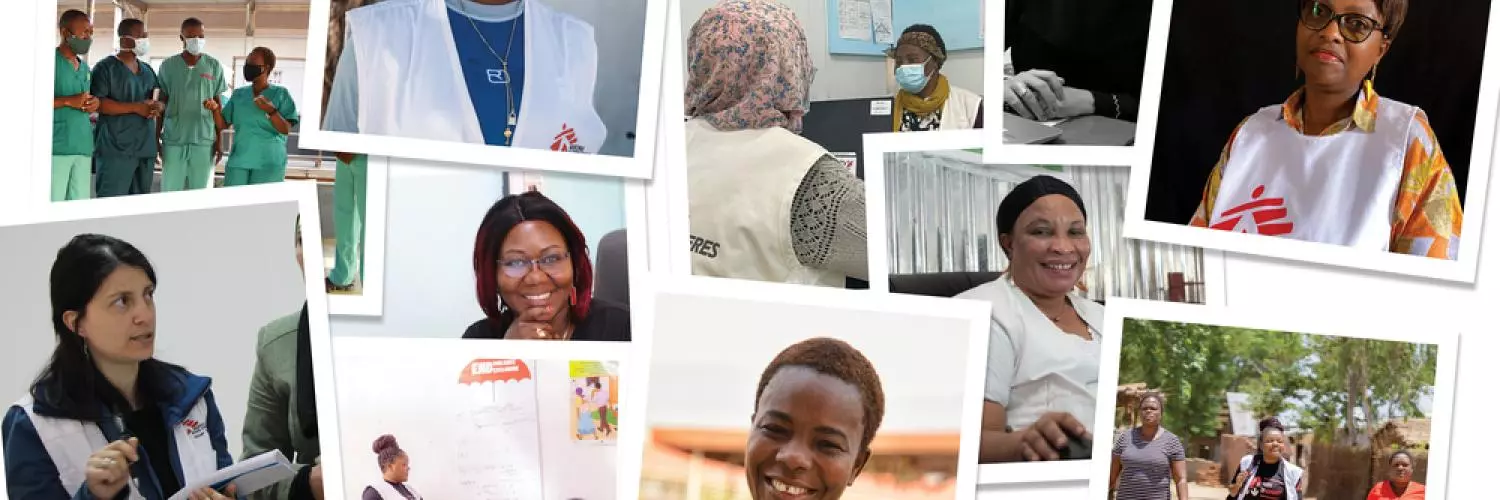
Celebrating Doctors Without Borders leaders
Many women working in Doctors Without Borders / Médecins Sans Frontières (MSF) medical projects have had to overcome barriers to be leaders, including gender stereotypes. Yet they stand out as change-makers and advocates in Doctors Without Borders and their communities, transforming perceptions about women and ensuring their voices contribute to making our programs inclusive and accessible to all.
Over 90 per cent of Doctors Without Borders staff are recruited locally. From drivers to nurse supervisors to finance coordinators, women leaders are critical to sustaining Doctors Without Borders' commitment to high quality, patient-centred care. With women’s leadership, we can ensure a more diverse and balanced perspective on everything from program design, through field-level implementation, to setting the future direction of the organisation.
So to mark International Women’s Day 2022, inspired by their diversity and their individual strength, we asked some of our unrecognised women leaders, “What can we learn from you?” Here’s what they told us.
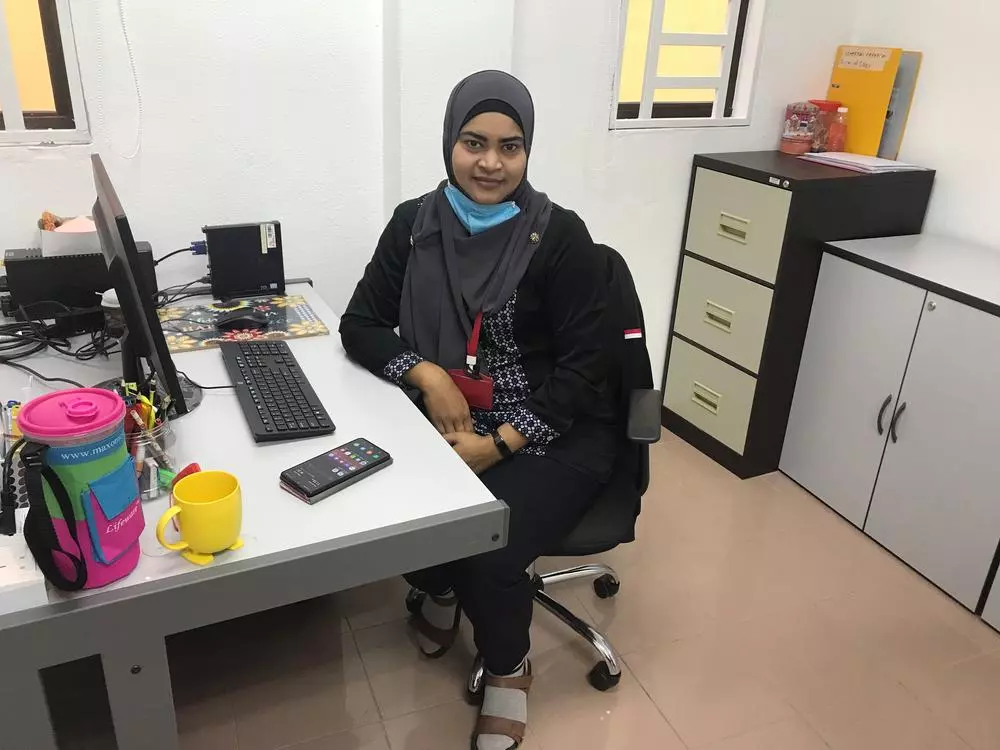
© Balvin Kaur/MSF
Nur Bar Binti Islam, mental health community case worker in Malaysia
Nur Bar Binti Islam is a Rohingya woman who volunteers with the sexual violence care team with Doctors Without Borders in Malaysia. When the 40-year-old mother of three first arrived in Malaysia at the age of six, she faced many challenges related to her safety and protection as well as lacking access to formal education.
- “This is my opportunity to help women”
I used to volunteer in Doctors Without Borders mobile clinics for four years before joining the sexual violence care team. The scope of my work is to assist survivors of sexual violence who need mental health support and medical care. I support mostly women and girls, some of them victims of human trafficking.
“To me leadership means becoming the voice of women who have been oppressed, becoming the voice, becoming the energy, becoming the power.”
I come to know most of the people I assist through phone calls, because I am very close with the community. I ask them to come to the Doctors Without Borders clinic in Butterworth, where we will sit down for a conversation on what they are going through, their condition, needs and capacity. Next, we will discuss ways forward. If the survivors need counselling, I will refer them to the mental health team. If they need medical care, I will refer them to the Doctors Without Borders doctor. If they need shelter or any other support, I will refer them to the relevant departments.
To me leadership means becoming the voice of women who have been oppressed, becoming the voice, becoming the energy, becoming the power for other women who really need humanitarian aid.
There were many incidents in my life that taught me how to move forward. All these tests strengthened me. I went through a divorce that left me traumatised, and many other incidents that forced me to be stronger for my children.
My family never supported me in helping other women, who badly need support, to become their voice as they do not know how to ask for help. There are many things that Rohingya women do not know. I was determined that maybe with my help, many women can be saved.
“We have to be strong and independent ourselves. For women out there, double your effort for the future.”
Despite all the challenges I have faced, I always thought that as long as God gives me the energy, bravery and experience, this is my opportunity to help women. Actually, I do not only support women, but anyone else who needs help.
In the fight to become a leader, for anyone, you have to be strong mentally and physically to face all the challenges and dangers, and this strength will carry you forward in your fight for your race, community and future generations.
My reminder to women out there: we have to be strong and independent ourselves. We need to have skills, a little bit of education—only then we can help ourselves. For women out there, double your efforts for the future.
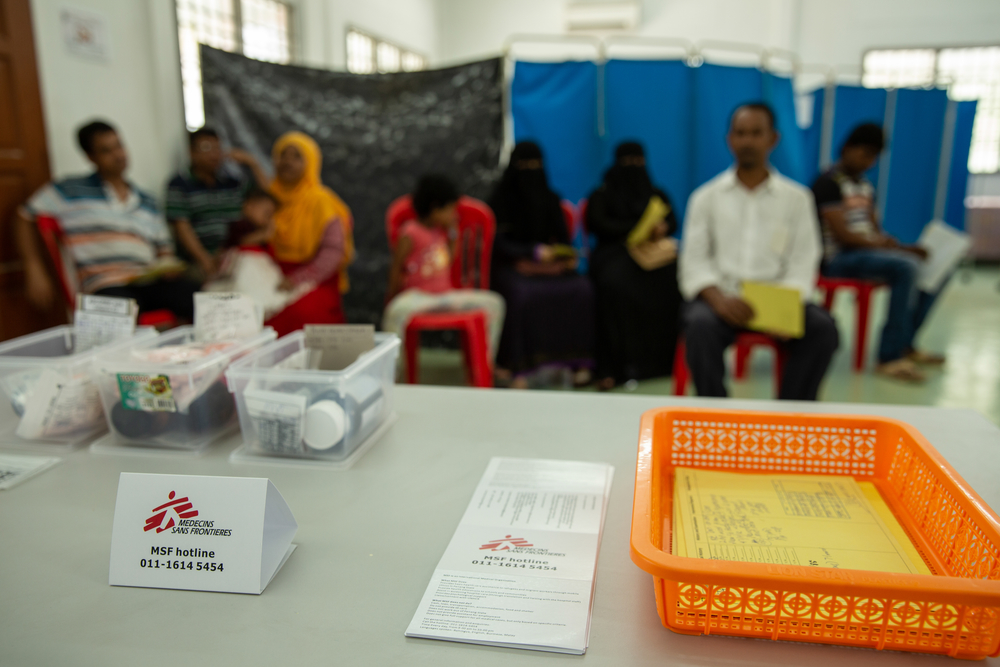
Doctors Without Borders has provided healthcare to refugees, asylum seekers and migrant communities in Malaysia since 2015. The fixed clinic in Butterworth, Penang offers primary healthcare, mental health services and psychosocial support, assisting 700 to 900 patients every month. We refer 200 patients per month to secondary or tertiary healthcare. The Doctors Without Borders team also conducts weekly mobile clinics to extend services to communities in remote areas of the state. Additionally, Doctors Without Borders provides medical and mental health support in three detention centres, where many of the detainees are Rohingya refugees.
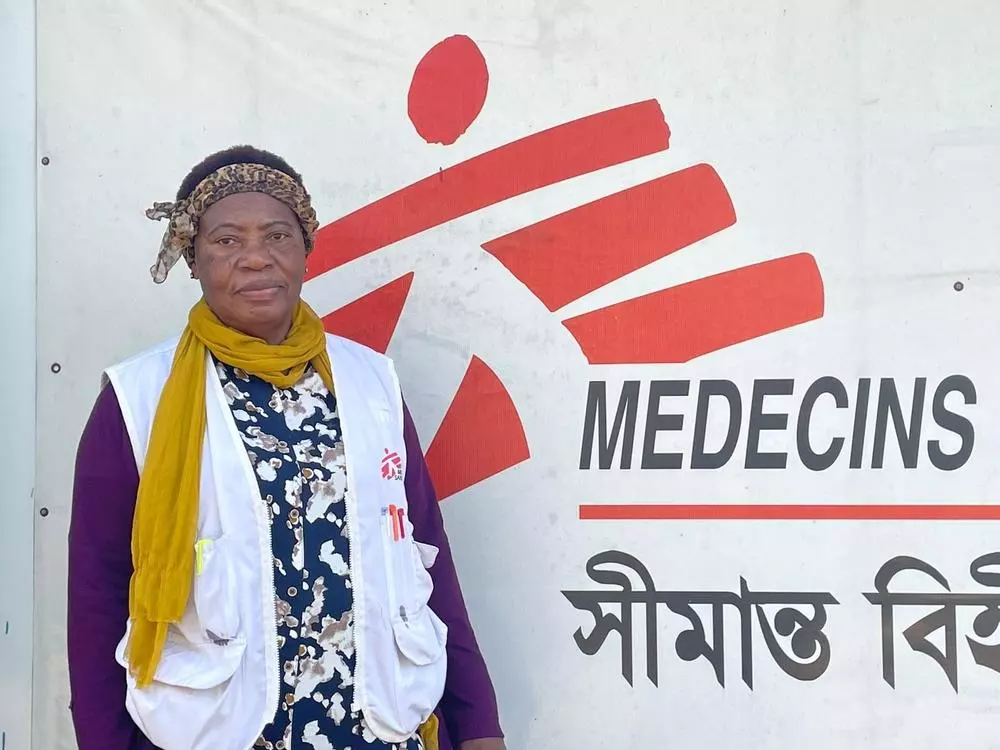
© Farah Tanjee/MSF
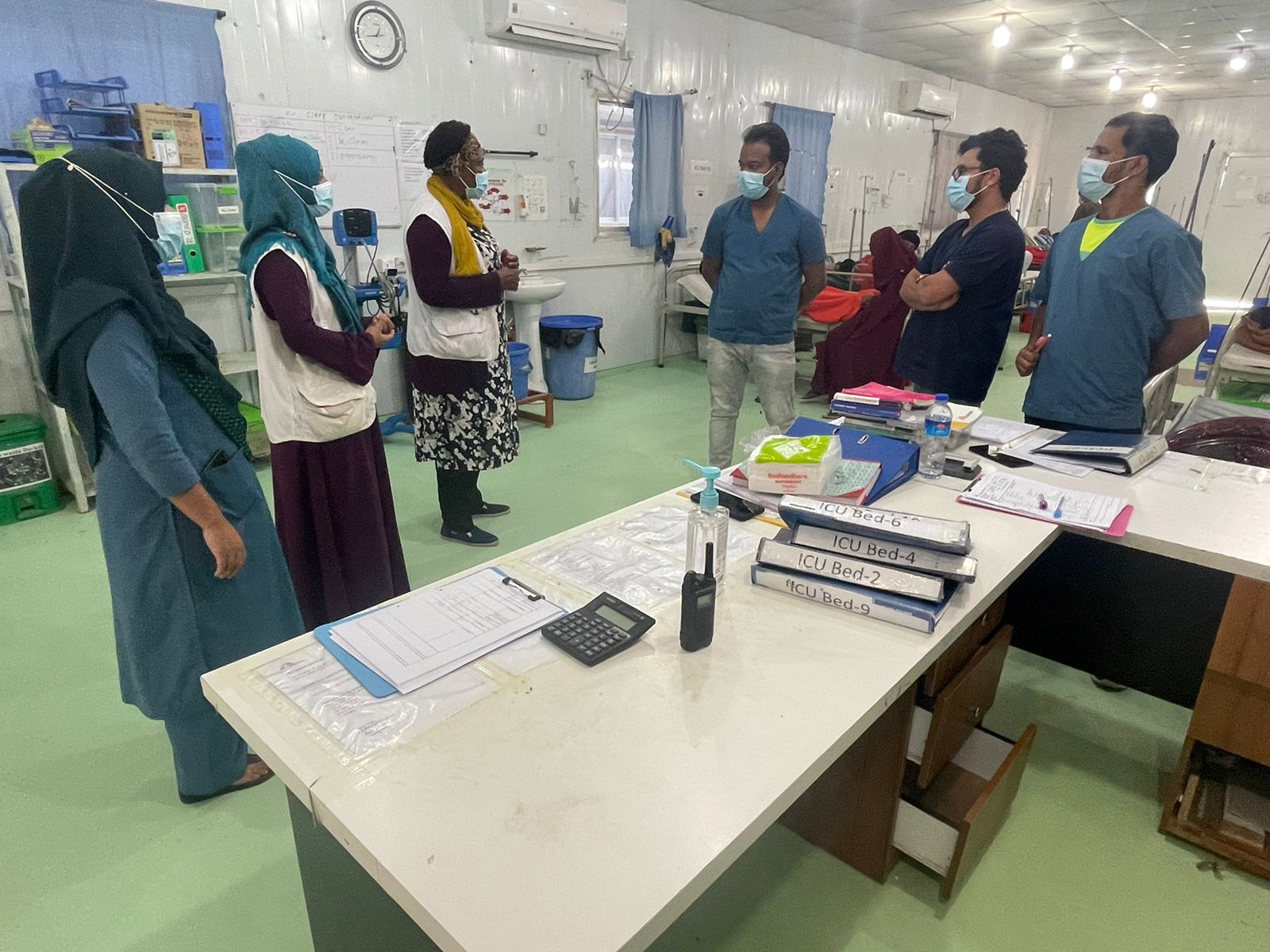
Rebecca Smith, medical activity manager in Bangladesh
She is medical activity manager in Doctors Without Borders ‘Hospital on the Hill’ in Cox’s Bazar, Bangladesh, which provides healthcare to the Rohingya refugees living in the 23 refugee camps. She began working with Doctors Without Borders when she was a refugee herself, running from conflict in her native Liberia and seeking refuge in Côte d’Ivoire (Ivory Coast).
- “Let us do it together”
For me, the humanitarian work started at an early age. When I was a child, my parents took care of orphans, other people, children. In our Liberian society everyone takes care of someone.
"So I grew up with that idea of being humanitarian, and I adopted the same idea when I grew up, too."
My story goes back to 1990, when Liberia was in civil war. I fled to the Ivory Coast as a refugee and volunteered in a clinic there, to use my skills as a nurse to help others who had fled. After three months we were approached by Doctors Without Borders who were opening a centre to treat malnourished children. They needed health workers and I was recommended by the clinic, so after meeting the Field Coordinator and passing a test I was hired as a nutrition assistant. This was my first encounter with Doctors Without Borders.
When the program had to close due to increased conflict, Doctors Without Borders moved the program to southeast Liberia, near my hometown, and I worked with them in the same hospital I had first worked in after my nursing training. Doctors Without Borders renovated the hospital, which had been damaged during the war, and after six months I was made supervisor of the project.
Unfortunately, another insurgency meant we had to flee back to the Ivory Coast, leaving everything behind. But Doctors Without Borders opened another hospital in Monrovia, the capital, and when I was in the refugee camp I got a letter saying that Doctors Without Borders was looking for me. I was made supervisor of the surgical department and worked there for five years.
In 2010 I took my first international assignment to Yemen. I’ve since worked with Doctors Without Borders in South Sudan, Nigeria and Kenya. I returned to Liberia during the Ebola crisis, and in April 2020 I helped with COVID-19 community awareness by distributing hand soap door-to-door. During the pandemic I was home waiting for the crisis to end, and when the opportunity came up for Bangladesh, I was asked if I would be willing to go. I said yes.
Now in my current role I am in charge of the medical doctors, nursing activity, nursing team supervisors, the emergency department, intensive care unit, general ward, isolation ward and the laboratory. I manage the supervisors of those areas and oversee the overall management of the hospital.
"As a leader I have challenges—you’ve got to have challenges; if you don’t, then it isn’t worth it. In leadership you have to be patient, you have to be able to tolerate some things, and you have to have good listening ears."
In some countries women have the last say, or don’t have any say at all. When you come in to be a leader it’s tricky, because sometimes they won’t do what you ask them to. Sometimes there is a stereotype attitude—that a woman is supposed to only be in a certain place, only cooking. We should try to get out of that attitude.
"Being a woman, being a leader, you have to be strong through these difficulties. I know in the future it will get better, but it is a gradual process. We should still persevere, we shouldn’t be discouraged, we should still do what we are called to do. We came to help—so then let us do it together."
The Cox’s Bazar district in Bangladesh has hosted Rohingya refugees fleeing targeted violence in neighbouring Myanmar's Rakhine state since 1978. Around 860,000 Rohingya refugees live in an area of 26 square kilometres. Doctors Without Borders' current response in Cox’s Bazar started in 2009 and now includes nine health facilities across Cox’s Bazar district, including three hospitals and three clinics specialised in primary health.
© Makhosazana Xaba
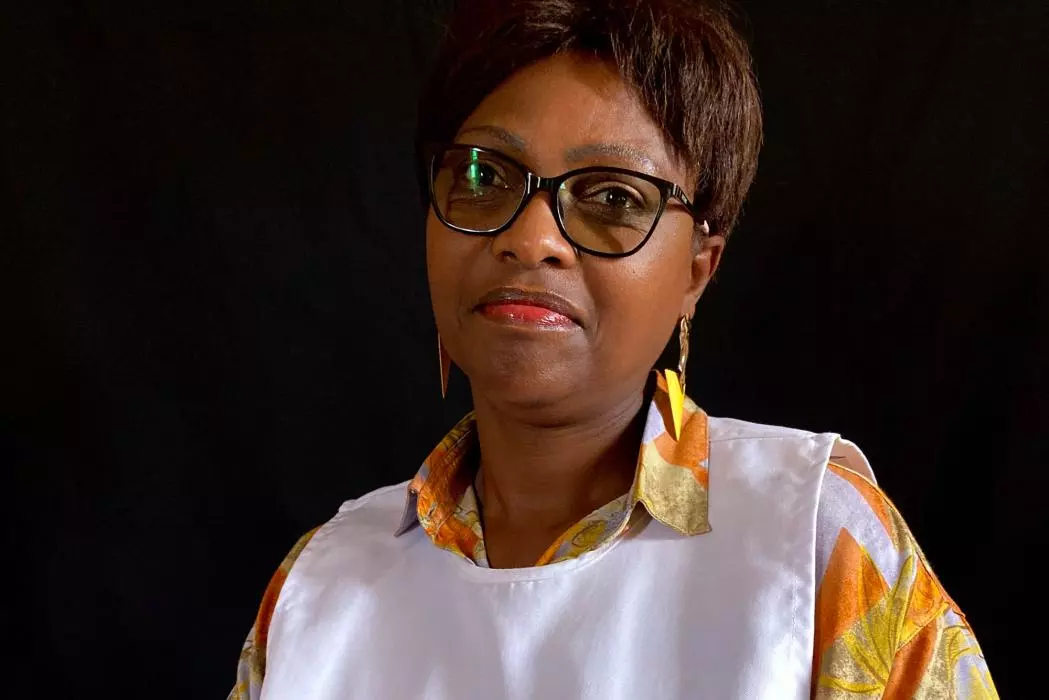
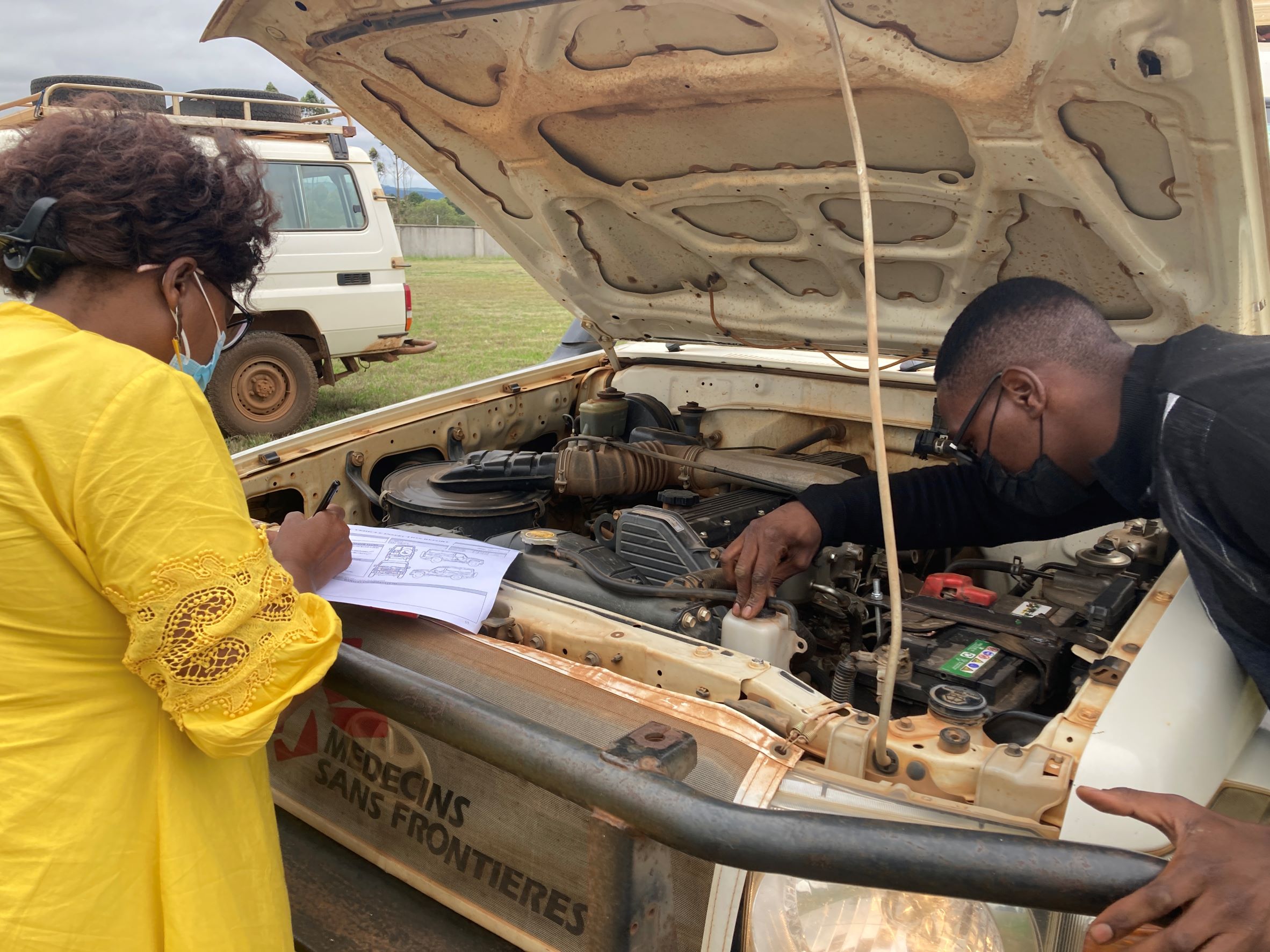
Fikile Ngwenya, a field driver in Eswatini
When Fikile Ngwenya was hired as a field driver for Doctors Without Borders in Shiselweni, Eswatini, she was thrilled. She faced questions and criticism as a woman in this non-traditional occupation, but she enjoys being a confident role model for her community.
- “To the women: Go there, do it!”
After my husband was transferred to the Shiselweni region, I looked for a job. I used to see these vans going around in town. Then a friend told me that this organisation [Doctors Without Borders] was hiring people for housekeeper, data clerk, and driver roles. So, I wrote three applications!
I got a call from the office that I must come for an interview for being a driver. I was very, very happy because I knew I got a job! I was so confident that I could do it.
I was the last one to interview. I heard someone asking: ‘How come it’s a lady this time?’
We drove to town and did the theory interviews. After a day they called me to come and work. I know how to drive. You give me a hard top, I drive it; you give me an Avanza, I drive it. I don’t stress. When I arrive, I check my car, I make sure the oil, water, everything, is okay. I check the cleanliness of my car. When someone gets in my car, they must know that the car I’m driving is a lady’s car. It must always be clean.
When we go into the community, they appreciate me. People say to me, ‘You, you girl! You are driving such a big car’ every day. They say, ‘This organisation is helping us; it helps us with our relatives’; they appreciate Doctors Without Borders. I learnt a lot about this organisation [through their work] concerning HIV and TB. At least now I know what HIV is and how you treat it and how you prevent HIV and TB.
But as a woman I faced challenges. Even the people I drive around, they do undermine me sometimes. And in that way, I feel like they are picking me up, they are empowering me by undermining me. It doesn’t stress me.
“We are different, we can’t all be doctors in the world, we are different types of people. Everyone has their own unique gift.”
I remember one time when I started working with Doctors Without Borders, there was another guy working in the office. He was talking to someone, he didn’t see me, and he was commenting: ‘I will never be driven around by a woman’.
Some time later I had to drive him to town. Then I asked him, ‘Remember what you said. And then what?’
At home I am a wife and mother. I have grandchildren. I am a woman, I am a driver. I do not have a problem with it. We are different, we can’t all be doctors in the world, we are different types of people. Everyone has their own unique gift.
To the women out there, don’t be afraid of being a woman and doing a job. Don’t fear anything and do it with a happy heart. To the women, the young ones, they must do whatever they are faced with. Even if it’s considered a man’s job. Go there and do it, with confidence.
“Don’t be afraid of being a woman and doing a job.”
Around one-third of adults in Eswatini (former Swaziland) are currently living with HIV, and many of them are co-infected with tuberculosis. Doctors Without Borders supports the Ministry of Health by working on reducing the transmission of these diseases and improving treatment. The COVID-19 pandemic has severely affected the lives of patients with HIV, tuberculosis and non-communicable diseases
© Melissa Perry/MSF
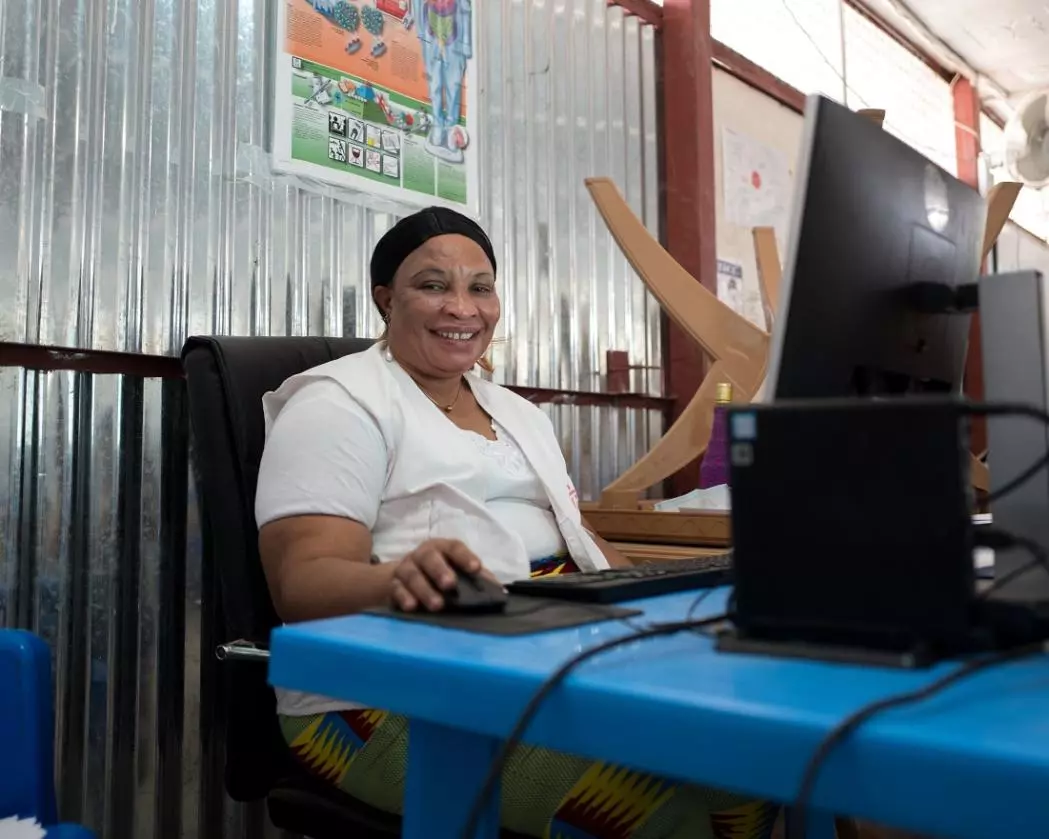
Fatmata Jebbeh Sumaila, midwife activity manager in South Sudan
Fatmata Jebbeh Sumaila is Doctors Without Borders midwife activity manager in Jonglei, South Sudan. After working for 17 years with Doctors Without Borders in her home country, Sierra Leone, she has embarked on an international career in recent years.
- “Together we are stronger”
My message is that women need to encourage each other, share opportunities and form a strong community of women by empowering each other. If you are a woman in a leadership position, recruit other women and provide training opportunities for women. Because together we are stronger.
I started working with Doctors Without Borders as a midwife in my country, Sierra Leone, in 2003, later becoming midwife supervisor. Whenever international staff would come to my country, they would say: ‘Fatmata you are not supposed to be working as a midwife again in your country, you are supposed to work internationally with Doctors Without Borders.’
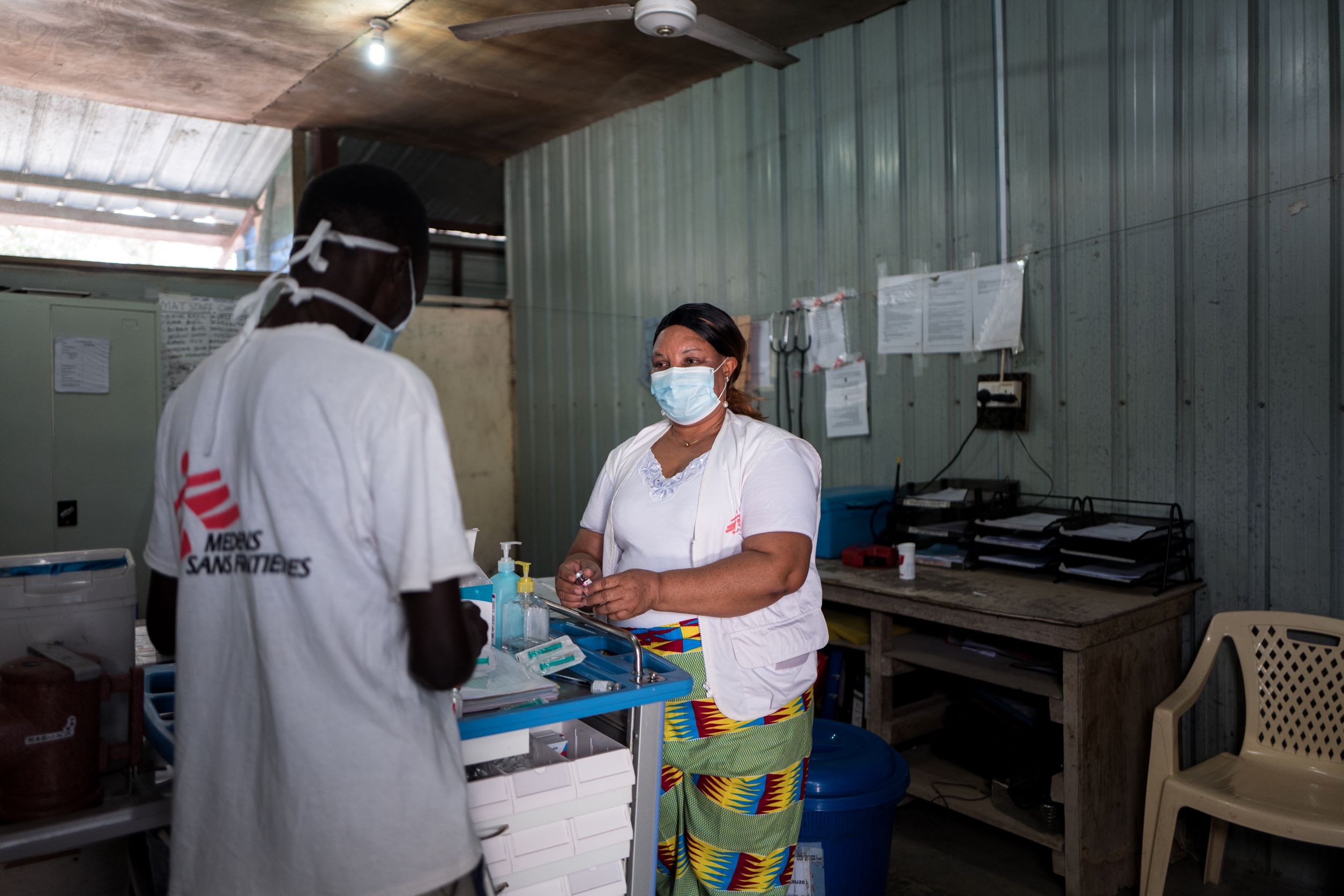
But I never knew how to go about it, and no one ever explained to me how to do it until I met one of Doctors Without Borders' women’s health advisors, Claire. Claire asked me what I really wanted to be, so I told her that I want to be an international field worker like her. With her guidance I started working towards it, first by learning how to write [formal documents such as] a morbidity and mortality report and an incident report. Then I eventually applied and was selected for a position.
My work as an international midwife activity manager involves assisting in complicated cases, both in maternity care and sexual and gender-based violence [SGBV] care. I also provide training to staff on complicated deliveries, and I’m responsible for the overall planning, monitoring and evaluation of sexual and reproductive health activities.
As a leader I have to set an example for my team by doing the hands-on work, as well as providing on-the-job training for many junior staff in all aspects of sexual and reproductive health and SGBV activities.
"I have inspired my staff by telling them the story of how I became a midwife, and in doing so they were motivated, and now some are even in school studying midwifery and state-registered nursing. I explain that to achieve your dreams in life or work you need to concentrate and work hard."
I’ve aimed to be a changemaker in my place of work by setting up better systems and processes. I’ve also made my staff realise the importance of time management, and introduced more efficient handovers to ensure quality care for our patients.
I have faced challenges as a woman, such as men ignoring my opinions, as well as misunderstandings with other women. I’ve overcome these challenges by being a good communicator, and talking about the importance of equal rights for both sexes, and respect for all people and their ideas.
After working in Sierra Leone, Bangladesh and now South Sudan, I’ve seen that many women are vulnerable and have no voice to speak out. This has motivated me to work for them and help them speak out loud about their problems, by giving them training about women’s rights.
"International Women’s Day is a particular day to acknowledge and honour women around the world for the contributions they make each day to society. It is a day to call to action accelerating gender parity, celebrating women’s achievements and raising awareness about women’s equality."
Just like Claire did for me, I now work to encourage other women by building their hopes, and standing up for other women.
The Jonglei Healthcare project was established in 1993 to respond to outbreaks of kala azar. The project has grown to be located across two counties, and includes the only secondary referral centre for Nyirol and Uror counties. It also includes an outpatient department in Lankien, Nyirol, a primary healthcare clinic in Pieri, Uror, and five community-based healthcare centres to serve populations who live far from the main healthcare structures.
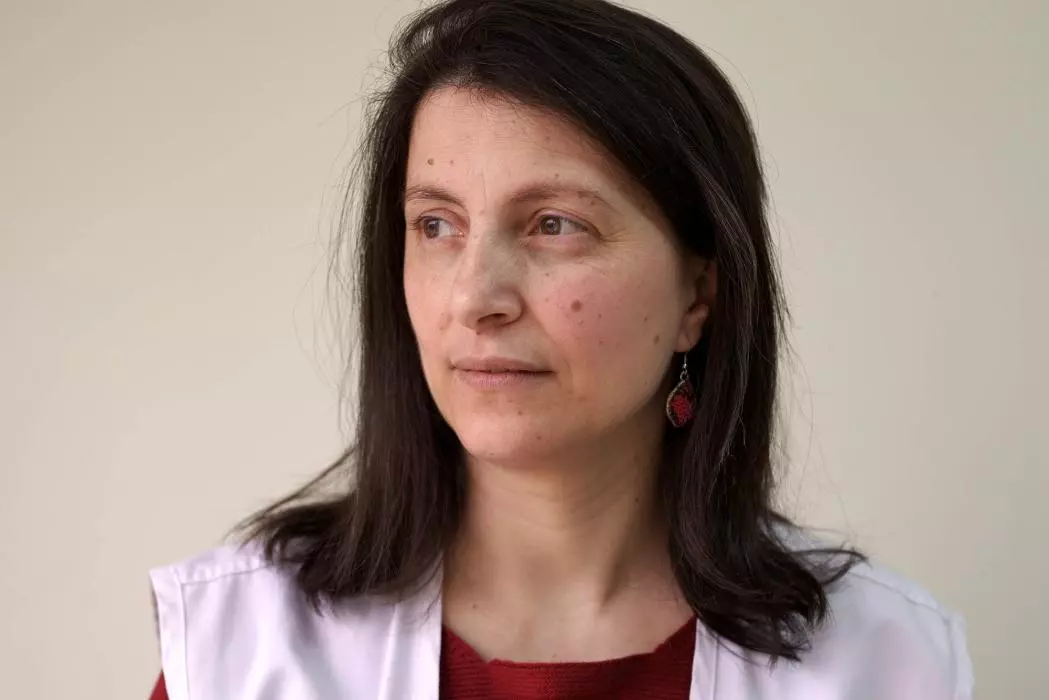
Shorouq Madmouj, social worker in Palestine
Social worker Shorouq Madmouj works with Doctors Without Borders in Nablus, Palestine. As a woman, she’s used to being underestimated. Over time, notwithstanding a visual impairment, she has served her conflict-hit community with compassion; and now she has been rewarded with their trust.
- “Don’t let them stop you”
As a woman I feel people underestimate me. They look at me and say: ‘She can’t do it. Who is she?’
To work with human beings is my passion in life. As a social worker I can help people in a way. The challenge is to find a way to knock on the door when you know the key for this person - to convince them to get help.
As a Palestinian, I work with people who suffer the impact of the occupation [of the West Bank]. I am also a person suffering from the occupation. I live in this community, I have my feelings, I am afraid, I am like them. Sometimes when working with a patient who suffers from something [it helps when] you have already suffered from it.
“When I receive a phone call from a father, I feel proud because this is part of that change today. They are calling us because they trust us.”
When we started work in the field in 2004, we did home visits in the community. Most of our job was explaining about Doctors Without Borders, who we were, about mental health, and what social workers and therapists do. Most of our patients at that time were children and women; most of our cases came from mothers asking for help for their children.
Today, in 2022, we receive a lot of calls from patients, and a lot of organisations contact us to refer a patient to us. Before we went out to people; today they come to us. Now we have on our waiting list female and child patients, as well as male patients who are asking for help. Now we have fathers calling us to ask for help for their children.
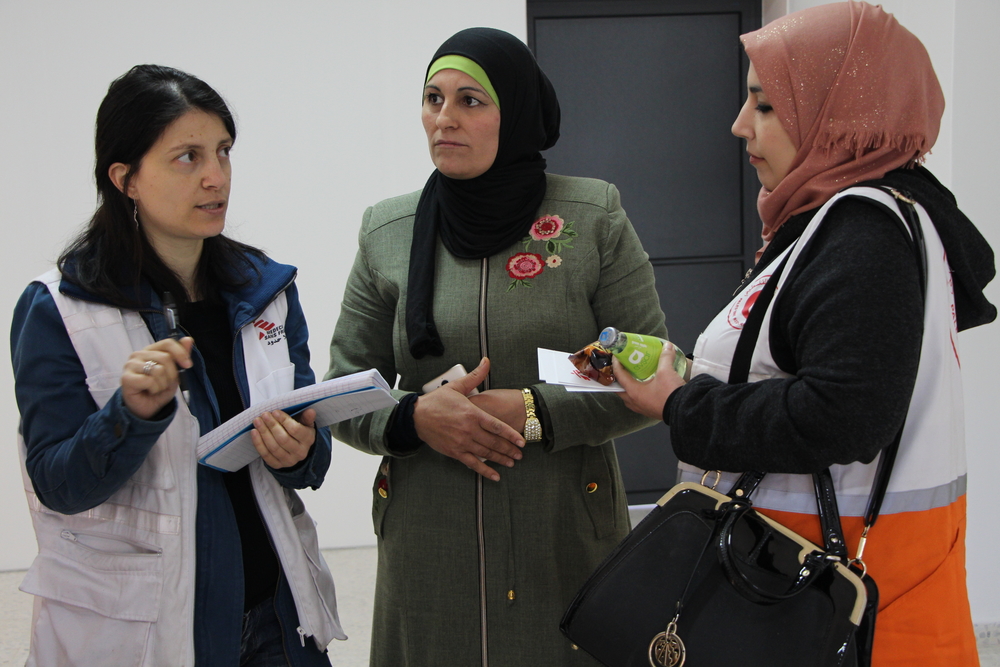
When I receive a phone call from a father, I feel proud because this is part of that change today. They are calling us because they trust us. They tell others that Doctors Without Borders can help them. Sometimes they contact me to tell me: ‘Shorouq... they told us you are the only ones that can help us.’ This has led me to feel that people know what Doctors Without Borders is about; they know we can help. This is the change we have been able to lead.
“When you want to change something, you should start with yourself. To be able to change means when you help other people, they can also be changed.”
To me, leadership means to understand and listen to others. To know exactly how you can help or how to manage with them. [But] when you want to change something, you should start with yourself. To be able to change means when you help other people, they can also be changed.
As a woman suffering from a vision disability for more than 20 years, I am still thinking and saying to myself, ‘you are thinking, that means you are here'.
A physical disability is not easy. And for me, the disability is how you think about it more than in the body. But, if you have some kind of disability, you have another higher power to continue and to manage more than others who don’t have any disability.
My message to women is: Don’t let a physical disability stop you!
Doctors Without Borders provides medical and psychological assistance to people affected by the conflict in Palestine caused by the ongoing occupation of the West Bank and the blockade of the Gaza Strip. The COVID-19 pandemic has exacerbated the health crisis in Palestine.