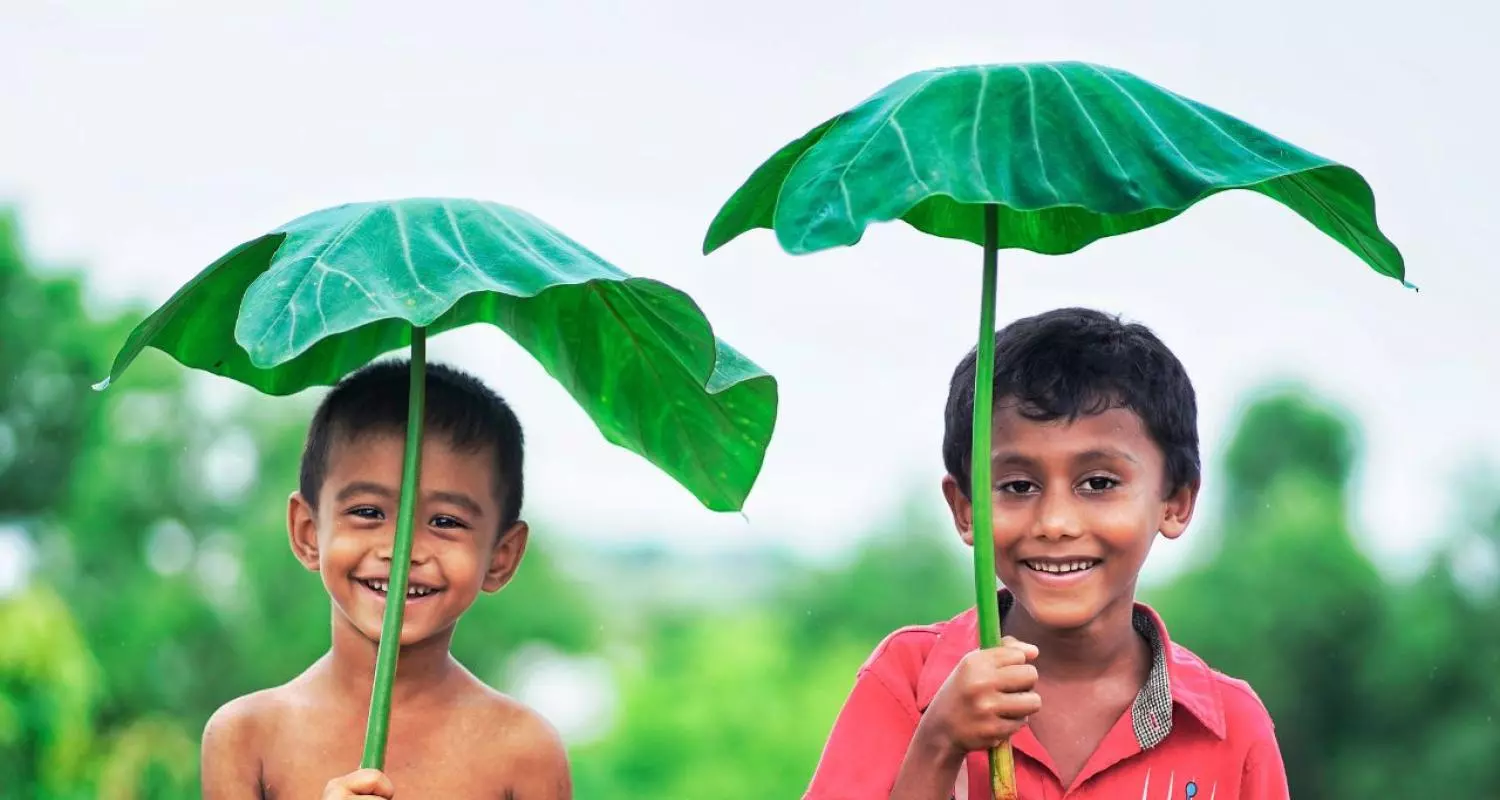
The Taro Leaf: A symbol for the Rohingya experience
On August 25, 2017, a campaign of targeted violence was waged against the Rohingya in Rakhine state by the Myanmar military. This was not the first campaign targeting the Rohingya, but it was by far the largest, and led to a mass exodus of more than 700,000 Rohingya.
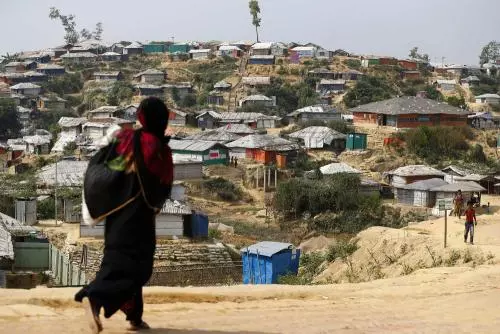
Eight years after the mass exodus, more than 1.2 million people remain in limbo in Cox’s Bazar, Bangladesh, and confined to camps. This includes more than 150,000 Rohingya who arrived since January 2024, after renewed clashes between armed groups in Myanmar. They are almost completely dependent on dwindling humanitarian assistance in Bangladesh, including food, and prohibited from formal employment. Generations of children have no recognized education. Meanwhile, the living conditions in the camps are deteriorating, with unexplained fevers, hepatitis C outbreaks, and scarcity of food and water. Most importantly, they face a future without hope for a life beyond the confines of the camps.
Telling the story of Rohingya statelessness in a new way
“If we don’t keep practicing our crafts, our culture will disappear—and we will lose our connection to Arakan,” says one Rohingya artist.
The taro leaf comes from a proverb, "Hoñsu Fathar Faaní" which translates to “not even water leaves a mark on a taro leaf”. This is how water sits on a taro leaf, like it's floating, and when the wind blows, it rolls off, leaving no mark. It reflects the feeling of floating, of having no land underfoot, belonging nowhere, and of being caught between countries that do not want them.
With support from Doctors Without Borders, Rohingya communities and artists in Cox’s Bazar have created artworks for the taro leaf symbol. With this, Rohingya people are making their mark by practicing, strengthening, and passing on their cultural traditions—resisting erasure despite being ‘stateless’ and denied fundamental rights. These creative acts are not only cultural expressions of pride, but also a form of survival and acts of resistance.
In a place where people are denied nationality, movement, even medical care, the simple act of shaping clay, weaving bamboo, or telling a story becomes an act of resistance and dignity. It says: We are still here. We still feel. We still matter.Ruhul Amin
- The Taro Leaf statement
The taro leaf is a symbol representing the Rohingya experience of statelessness. It comes from a proverb: Hoñsu Fathar Faaní, which is about how water sits on a taro leaf, like its floating, and when the wind blows, it rolls off, leaving no mark.
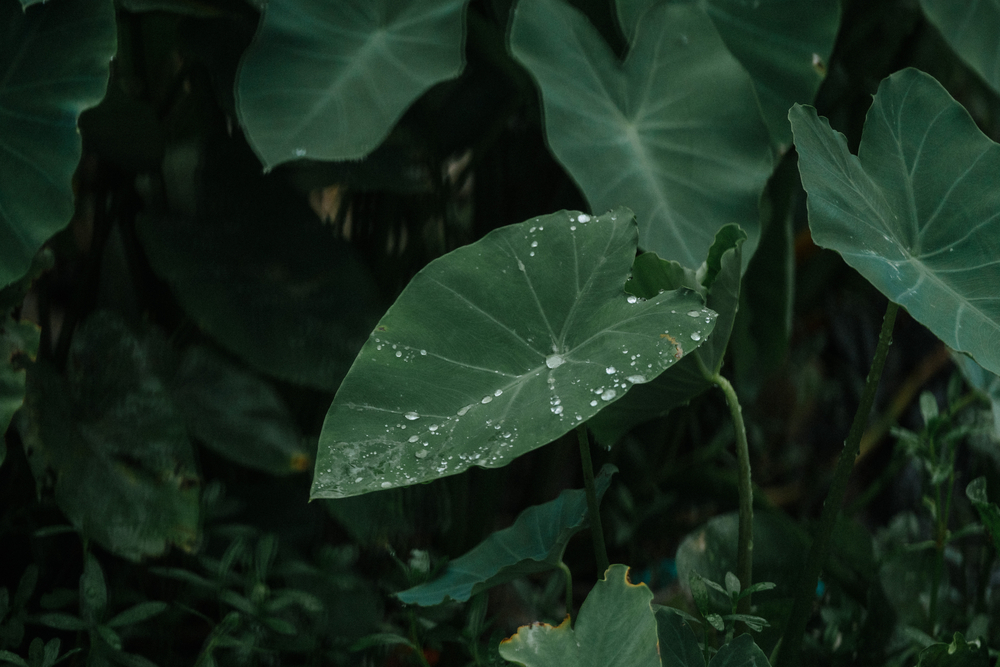
This is what statelessness feels like. For Rohingya, our history is being erased in Arakan, and wherever we live it is difficult to get documents, to practice our culture and build a life and future. We are like water on a taro leaf, floating with no land under our feet, we are at threat of disappearing. So for Rohingya, existing is resisting, we need to keep living our lives, telling our stories and continuing our legacy (Meeras).
This floating creates many problems, especially for Rohingya stuck in Kutupalong refugee camp. We are restless, living in limbo between countries that don't want us, it is difficult to access education, healthcare, and opportunities for the future. This means our kids are on the street and make bad decisions like being convinced to choose violence over community, some husbands turn to gambling with the hope of finding a way out, women feel unsafe walking alone, and we fight over the little resources we have like selling water or controlling access through the camp, at any time authorities can move us to another shelter and we have no right to refuse, we feel shame begging for operations or asking permission to move. We have been floating for eight years, some of us for much longer, as time goes on we loose hope and begin to think that camp life is our destiny, or there is no destination, only a journey of suffering.
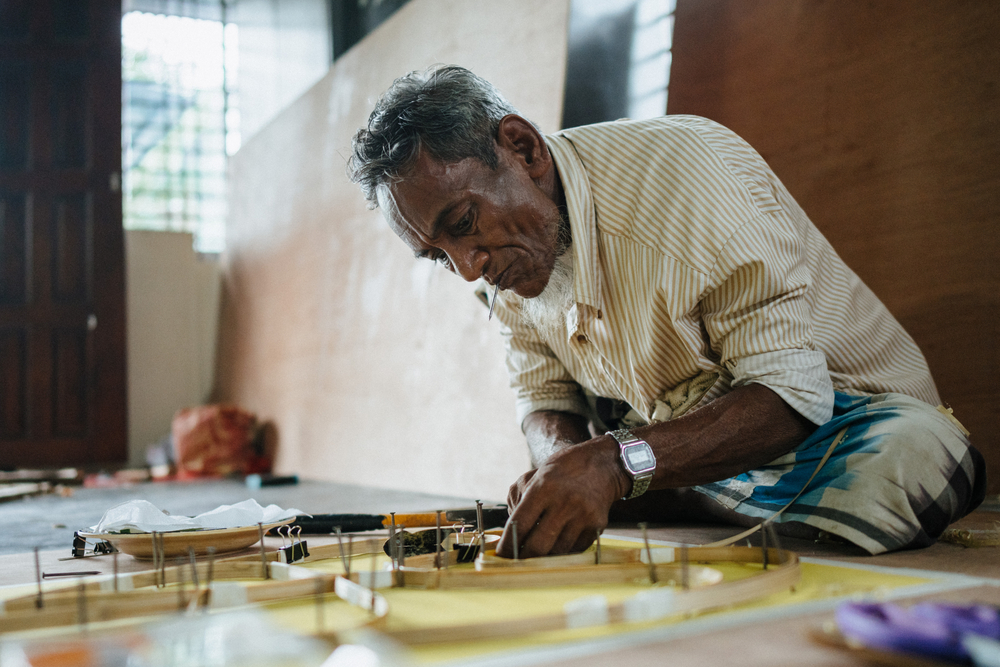
But despite this many of us keep finding the strength to make a mark, by practicing our culture, teaching our children, studying in online universities, working toward our future, and finding pathways out of the camp, we revive our language, hold Arakan in our hearts, find things we can control in our hands, keep advocating for rights, and create diverse stories to represent our people.
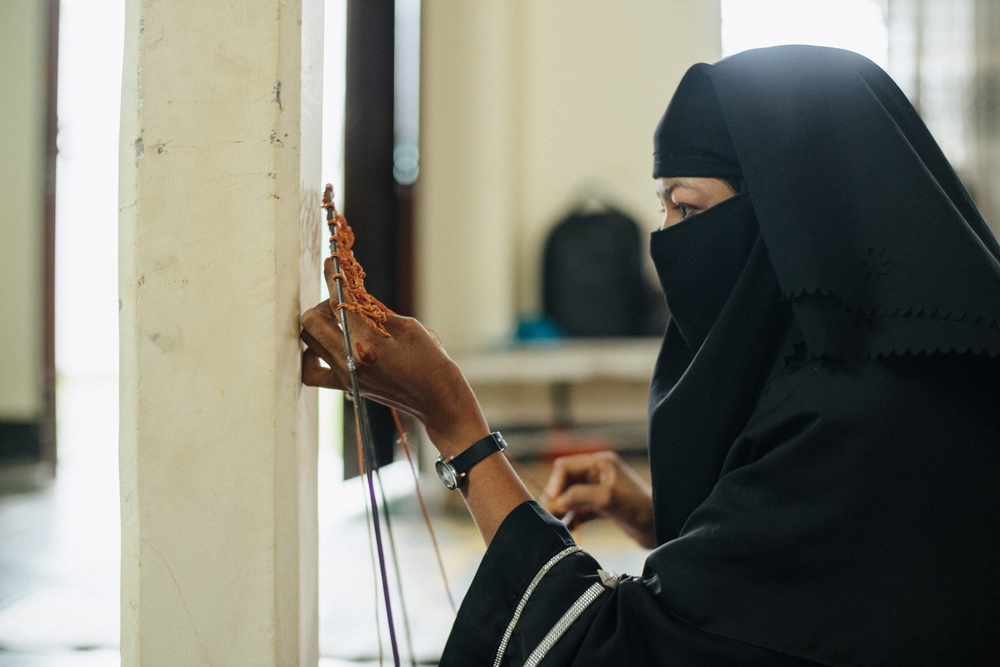
The taro leaf shares this story with the international community, to help people understand the experience of statelessness and to put pressure on governments for positive change. But the symbol is also for us, it helps us continue our legacy. All the crafts you see here are part of Rohingya culture, if we don't keep practicing them we will loose our culture and our connection to country. In Arakan we made fish nets and bamboo farming tools out of necessity, but in the camp we have stopped, because there is no land. This project has helped us practice these crafts and pass these stories onto our children. It reminds us what it is to be Rohingya.
We hope one day these water drops can find a place to rest. We want to return home or find other places to settle with safety, dignity and rights. If this is not possible there is no point in providing food or shelter, will we be in this camp for another 50 years? Please help us find a pathway forward, we cannot do it alone.
The taro leaf symbol artworks represent the Rohingya experiences around forced displacement and statelessness. This statement is compiled collected from interviews with Rohingya artists and community members.
Taro leaf artworks and makers

Honsu Fathar on cane glass. Bangladesh, 2025. © Victor Caringal/MSF
Nurul first learned weaving in 1991 as a refugee in Moricha, Bangladesh, and then again upon returning to Myanmar — only to be expelled in 2017. “My father had some skill in weaving, so I tried to learn from him. He used to work on commission pieces. I wanted to carry that on.”
His work is a message to the world: “We have no land under our feet, but with the help of others, we can keep our culture alive — and one day regain our freedom. Unless we return to our homeland, our culture will fade. Without art, we are not fully Rohingya. When water falls on a taro leaf, we hope it leaves a mark. This is our mark — especially for when we return.”
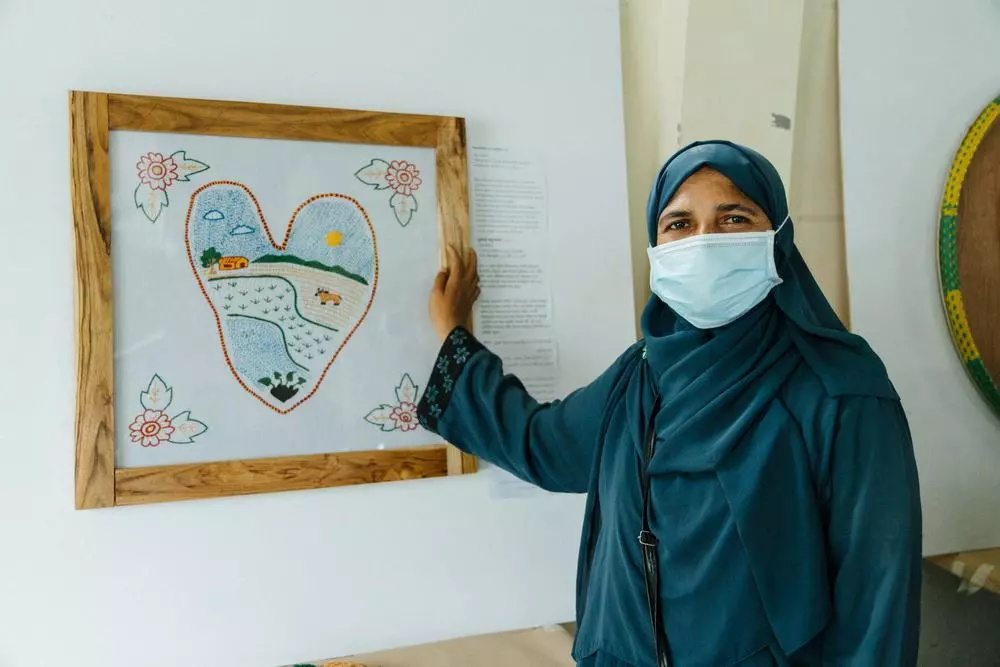
Honsu Fathar on cotton. Bangladesh, 2025. © Victor Caringal/MSF
Senu trained in weaving through a vocational program in Myanmar when she was 23 years old. She is used to making lungis, scarves, pillow covers, and bedsheets. Her embroidery carries both cultural memory and quiet resistance.
“We never thought the Rakhine and Burmese governments would drive us away, the taro leaf is our document, and we are the water. The leaf remains in Myanmar, and like water, we’ve been forced to flow elsewhere. If we show this to the world, maybe our mark will remain.”

Honsu Fathar on ceramics. Bangladesh, 2025. © Victor Caringal/MSF
Kali (right) learned pottery from his father, and Bishi Bala (left) from her in-laws after marriage — continuing a craft that spans generations. From pots to animals, jugs to toys, they shape clay with memory and meaning.
“We live under tarpaulin sheets because we have no land, no country,” they say. “That’s what makes us stateless. But by working together — with people from different places — we create something joyful. That’s what we like about this project.”
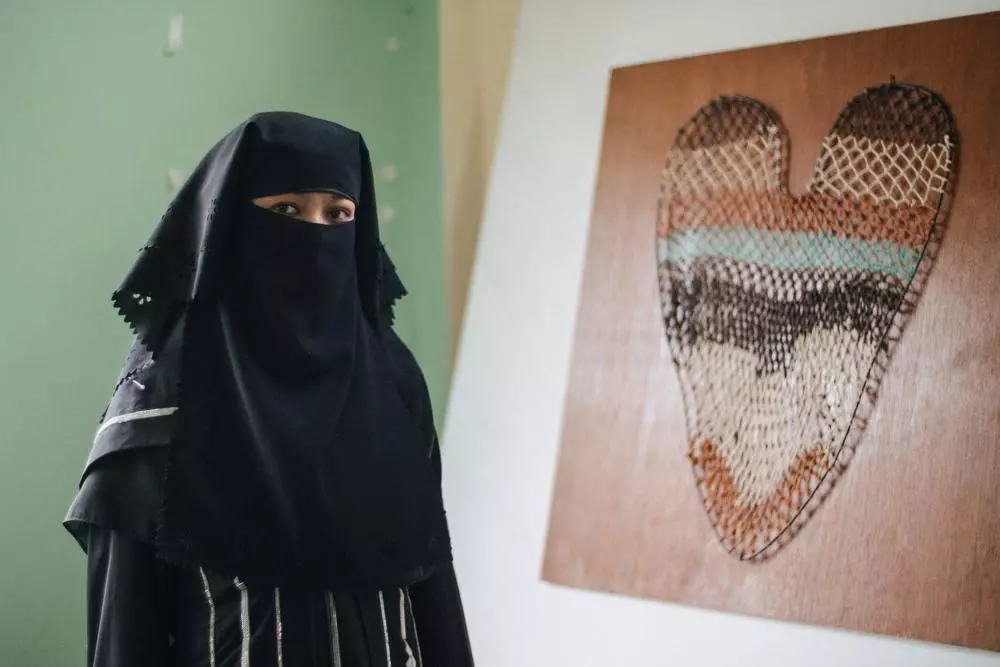
Honsu Fathar on woven net. Bangladesh, 2025. © Victor Caringal/MSF
Nuru’s curiosity led her to learn different craft practices from everyone around her — farmers, makers, weavers. “I asked them to teach me. I learned from my grandparents, who used basketry to make all kinds of farming tools. Since I had no elder brother, I learned everything — even ploughing. My husband was a refugee in 1992. He taught me how to make stools. And I kept learning.”
She now sees this work as an act of cultural preservation. “If we don’t pass this on to our children, it will disappear — and with it, our Rohingya name. This is how I keep my grandparents alive. This is how I leave my mark. Like water on a taro leaf, nothing remains unless we make an effort. If we lose our culture, we disappear.”
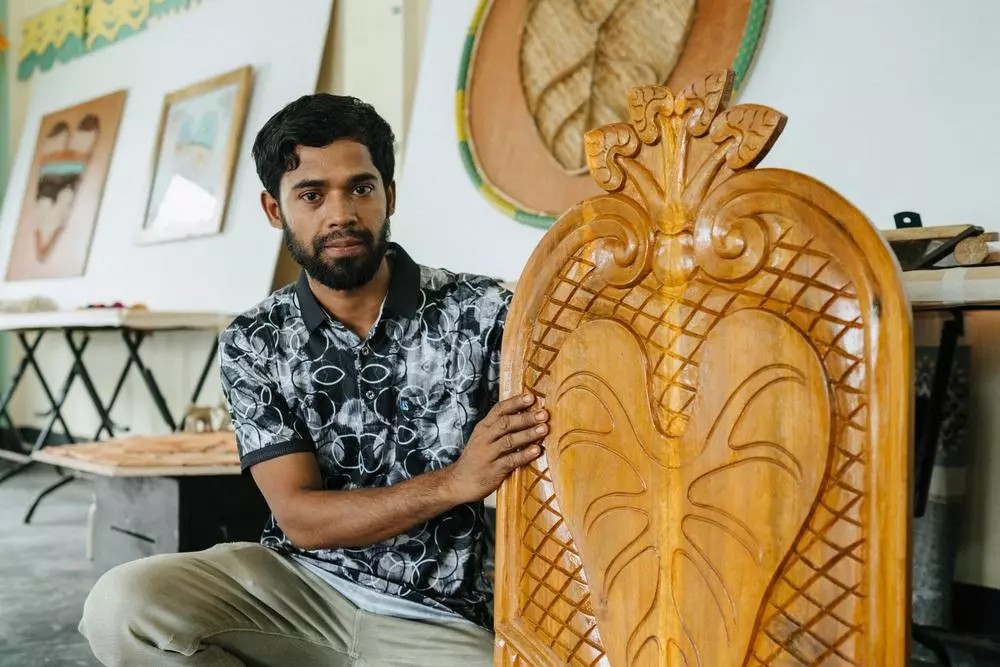
Honsu Fathar on wood. Bangladesh, 2025. © Victor Caringal/MSF
Kolim began woodworking at age 10 in Arakan, learning from a local carpenter to survive. “We started this work out of necessity, to put food on the table, many people buy my furniture for weddings, I also make lots of baby cradles”. Through carving the taro Kolim shares a message: “Our life is like water on a taro leaf, we have no ground beneath us, no place to stand. But by showing this publicly, across the world, we leave a mark that cannot be thrown away.”
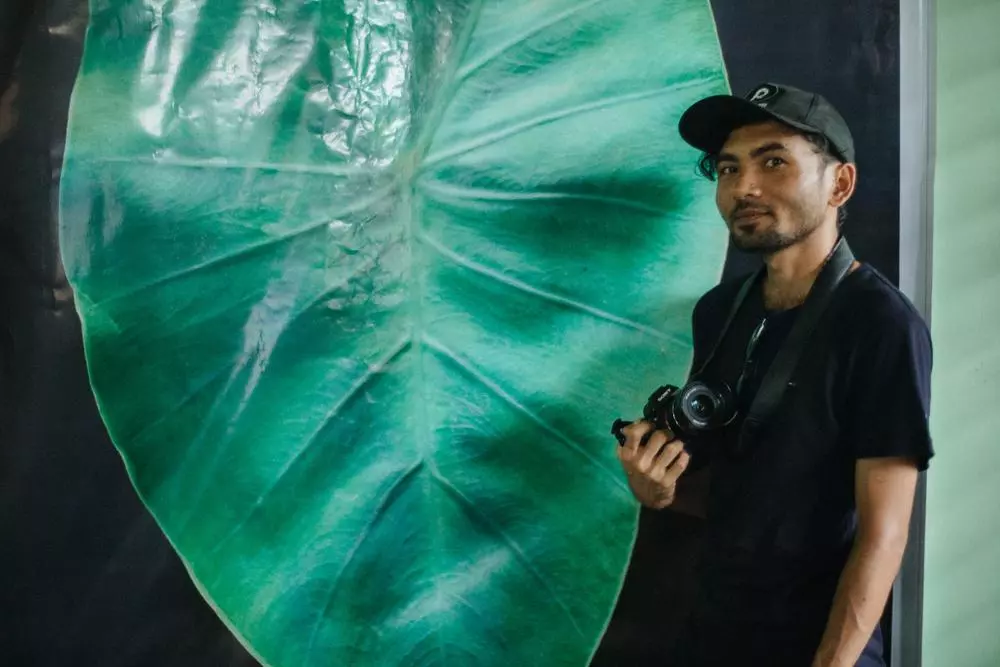
Honsu Fathar in photography. Bangladesh, 2025. © Victor Caringal/MSF
Sahat began photography in Myanmar in 2014, first photographing football games. But after the 2017 military violence forced him to flee to Bangladesh, his focus shifted. He began documenting life in the refugee camps — not just to bear witness, but to make the world feel.
An award-winning photojournalist, Sahat now runs Rohingya phographer, a global platform amplifying Rohingya voices through photography.
“The taro leaf in my photo shows the world that our crisis continues — that we are still here. The world is big enough to carry us, but we are treated like water on a taro leaf: never given a place to rest. I want the world to know that Rohingya people are human beings. We exist. We deserve peace, knowledge, and dignity — just like everyone else.”
Related articles
Support us
Help us provide lifesaving medical care by making a donation today.