In the more than 70 countries where we work, Doctors Without Borders / Médecins Sans Frontières’ (MSF) teams committed substantial resources to developing dedicated infectious disease projects. During COVID-19, our field teams continue to face health crises that affect our patients every year, which we cannot neglect. This is why we worked on maintaining essential healthcare services in our existing programmes.
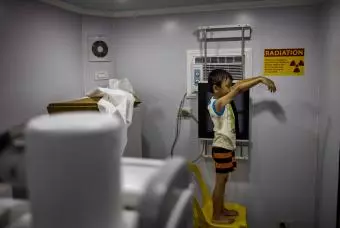
Tuberculosis (TB), the world’s deadliest infectious disease, disproportionately affects the world’s poorest communities. Since 2022, Doctors Without Borders teams and local partners in Manila, Philippines, have been using a mobile X-ray truck combined with a new promising tool based on artificial intelligence (AI) to help detect signs of pulmonary TB on chest X-rays. This model has made it possible to increase the number of people screened and better detect household contact persons and put them on treatment.
In the first half of 2023, the number of measles patients received in Doctors Without Borders-supported facilities in Yemen has nearly tripled compared to the whole of 2022. In some of the health centres we support, we have adapted our activities to cater to the increased needs. The measles infection outbreak in Yemen is a clear reminder of the importance of vaccination and the need for readiness for rapid medical intervention in times of crisis.
Tackling hepatitis C is a critical step in addressing the global health crisis that claims over 1.3 million lives annually. In the refugee camps in Cox’s Bazar, Bangladesh, nearly 20% of Rohingya refugees tested in these camps have an active hepatitis C infection. To combat this, Doctors Without Borders focused on three critical areas: raising awareness, providing comprehensive testing and treatment, and breaking down the associated stigmas.
Millions of people still die each year from infectious diseases that are preventable or can be treated. Three of these diseases are particularly prevalent in Southeast Asia: measles, tuberculosis, and hepatitis C. Vaccination not only protects the individual but also helps achieve community immunity, which is crucial in preventing infectious disease outbreaks.