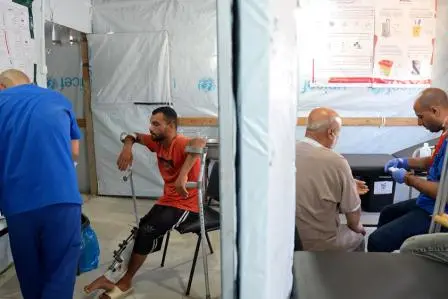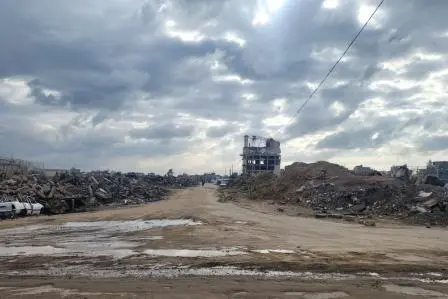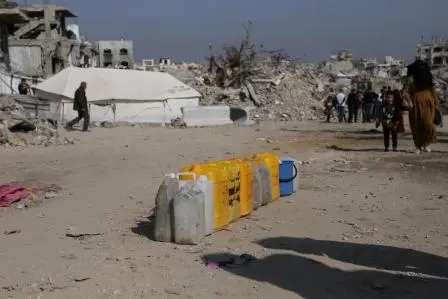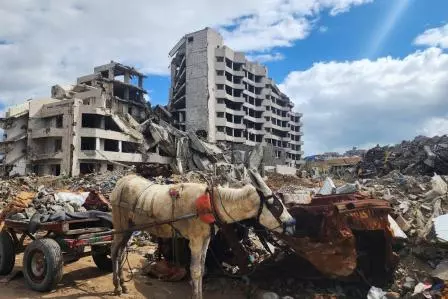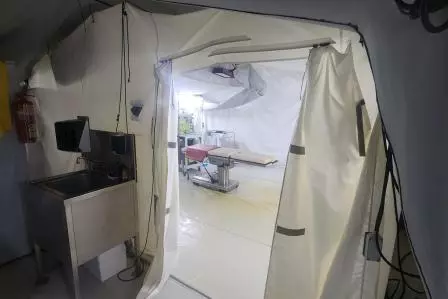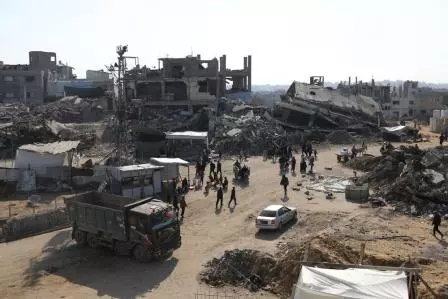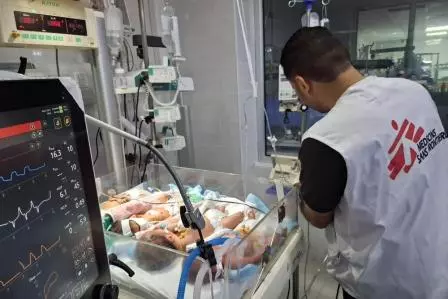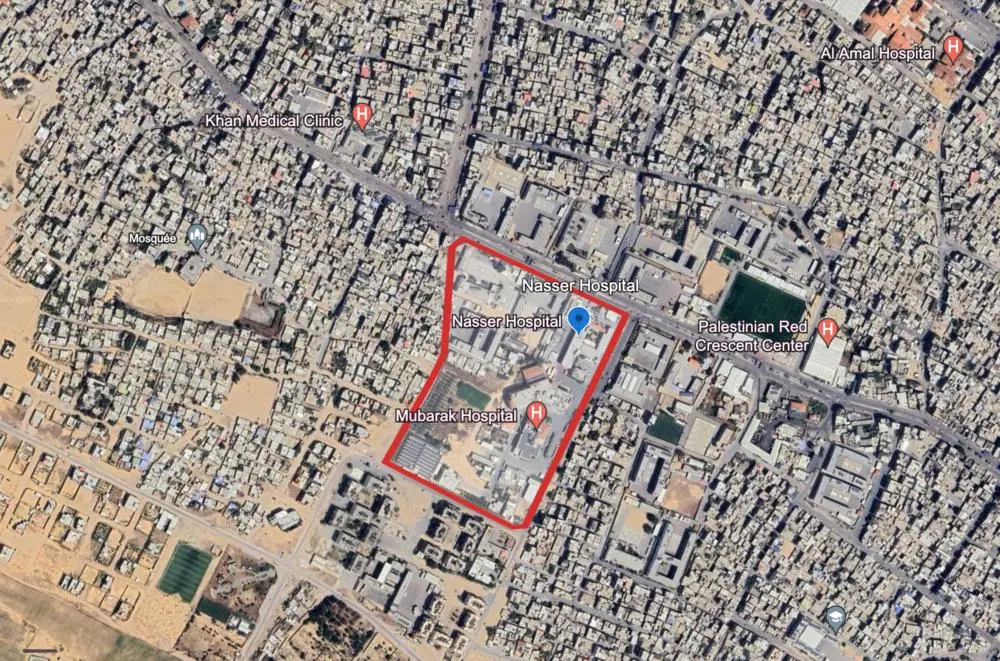
A view of the Nasser Hospital map. Palestine, 2024 © Google Earth
I know Gaza from the sky, but to really know the context and what things really look like, I need to work closely with our local staff. I couldn’t do my job without them.Laurie Boobier, Geographical Information Systems (GIS) specialist
The power of mapping
I always say, ‘a map can tell a thousand words’. Reports and briefings are fine, but if it's too long or complicated, people won't read it. If it’s visual and available to access even without an internet connection, then our teams can understand the context quickly and easily.
My role can change depending on where I’m working. For example, when I supported a Doctors Without Borders project delivering a vaccination campaign in Malawi, the objective was to identify where the needs were. A lot of the space in the remote area of over 3,500 square kilometres hadn’t been digitally mapped. We were looking at the schools, assessing gaps in vaccination coverage, and working out how difficult it would be to get there by road.
In Gaza, Doctors Without Borders provides a lot of water and sanitation to people, so assessing needs is also important. But about 80 percent of my work is about trying to keep people safe.
Unlike in Malawi, in Gaza everything has been mapped. But when the ‘yellow line’ moves so frequently, things become complicated.
The yellow line
Since the ceasefire agreement on 10 October 2025, the Gaza Strip is effectively divided by a dangerous, ever-expanding and ambiguous yellow line controlled by the Israeli military.
One side of the line is under Israeli military control – marking 58 per cent of the Strip – pushing the entire population of Gaza into the remaining 42 per cent of the territory. The line is not clearly marked for Palestinians and is gradually shifting to the west.
Doctors Without Borders teams have received several patients with violent injuries related to the yellow line; Palestinians have been regularly shot by the Israeli forces while collecting water or firewood, or approaching their own homes that are near the line.
In fact, there are three lines. First, there’s the official one that Israeli authorities have published online.
Then there’s the line which is physically marked by yellow blocks that are dropped from the sky. This doesn’t completely match the official one. This is where we believe the line actually is and we can see it from satellite imagery and sometimes our teams on the ground are also able to validate it.
Finally, there’s the orange line, just before the yellow line. To cross this line we must coordinate the movement with the Israeli side to avoid risk. We would need to tell them the route and the time of our movement in advance and any vehicle would be tracked.
One of our facilities was only one kilometre away from the orange line – too close – so they had to move by 700 metres because it was too dangerous.
But these lines only tell you so much, because Israel is still bombing places inside the so-called safe zone.
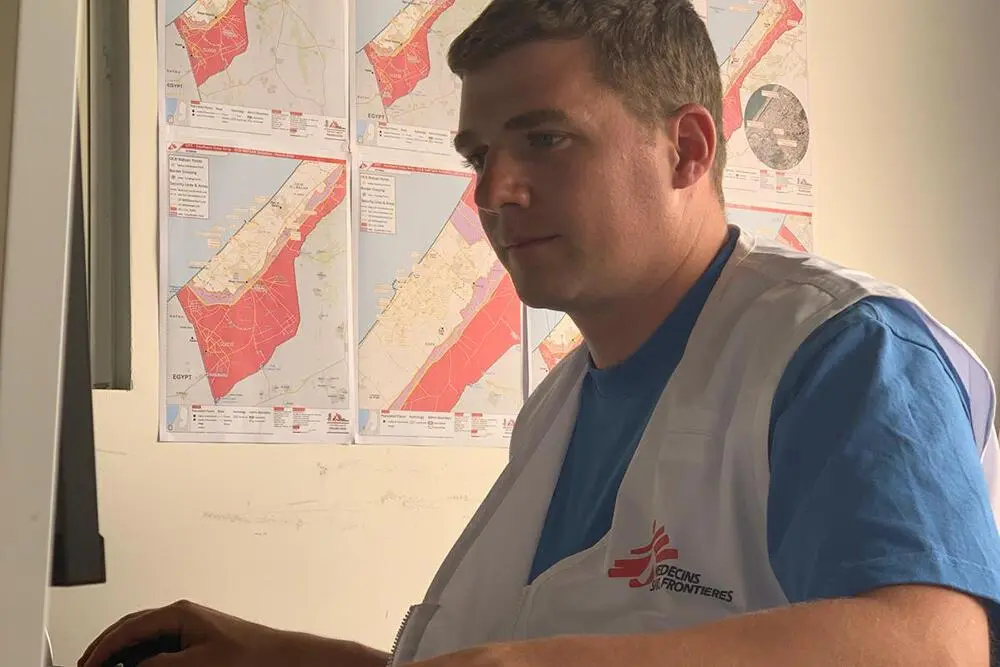
Laurie Boobier, Geographical Information Systems (GIS) specialist with Doctors Without Borders at his desk in Amman, Jordan. 2026 © MSF
The importance of local knowledge
I’m very aware that in my role, I've never actually been to the place where I’m mapping. I know Gaza from the sky, but to really know the context and what things really look like, I need to work closely with our local staff. I couldn’t do my job without them.
Early on, we needed to map all the streets, all the junctions, and all the road names, making sure this matched the names Palestinians actually use. When there's an air strike, our security teams might name the location, for example there's one junction that's called 'Fish Fresh'. But some people might not know where this is. Now the junction is named on a big map you can point to, which is so useful.
Sometimes I think it's just Doctors Without Borders' international staff who need the map. But when local staff use it and give positive feedback, it’s especially satisfying.
I never say “no” to people: there's always a way to do something. I'm a very small cog in the machine, but the work our teams in Gaza are doing is incredible. We support one in five beds in the Gaza Strip. When I think about the work on the ground, it makes my work meaningful.”