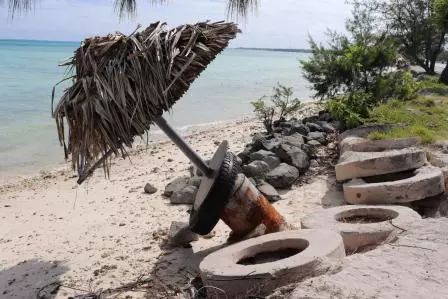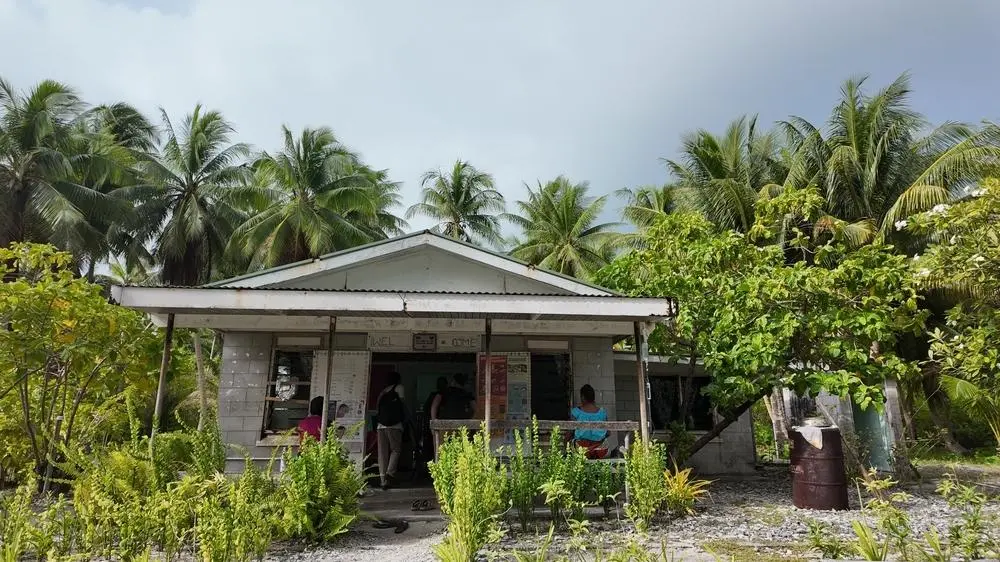
A clinic in the outer island, where Doctors Without Borders medical staff work, is a single-storey cement structure. Doctors Without Borders supports local nurses and midwives with training and patient care. With no running water or toilets, waste management remains one of the major health challenges. Kiribati, 2025 © Pratistha Koirala/MSF
When medical waste is not managed effectively, it can have negative consequences for communities, contributing to environmental damage, including soil contamination, toxic air pollutants and ecosystem disruption.Peter Clausen, Head of Mission for Doctors Without Borders in Kiribati
The Kiribati Health Care Waste Management project represents an integrated, cross-sector approach that brings together government, humanitarian, and private sector technical expertise to address a complex public health and environmental issue. It is designed not only to respond to Kiribati’s immediate needs but also to offer a practical and scalable model for other island nations facing similar challenges.
“Countries like Kiribati carry a disproportionate burden from waste and climate pressures that originate far beyond their borders. We are not solving that. What we are doing is building a waste management system that is functional, compliant, and designed to last,” says Sebastian Frisch, co-founder of BlackForest Solutions.
By strengthening healthcare waste management systems, the initiative aims to reduce risks to human health, protect fragile island environments, and support compliant and sustainable healthcare waste management systems for the people of Kiribati.
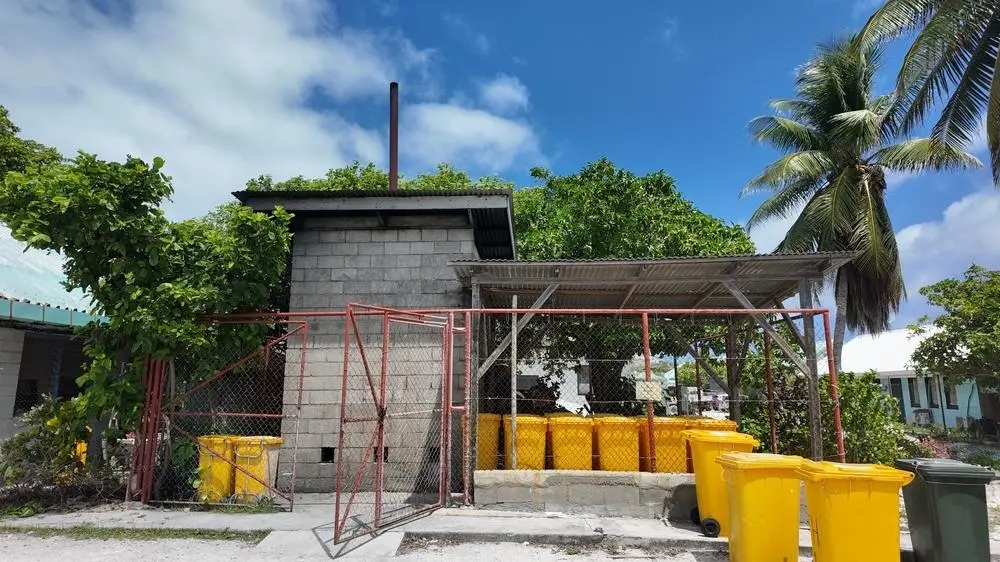
Incinerator and trash bins (yellow) supported by various international organisations at a hospital in Tarawa. Waste management is a serious concern that the island nation faces and one of the key concerns of the government of Kiribati. Kiribati, 2025 © Pratistha Koirala/MSF
This challenge is not unique to Kiribati
The United Nations Environment Programme has identified that Small Island Developing States (SIDS) across the Pacific face the same constraints: limited land, climate vulnerability, and waste infrastructure that has not kept pace with demand.
The Government of Kiribati, in partnership with Doctors Without Borders and supported by BFS, is now delivering a direct response to this challenge: a comprehensive healthcare waste management project at the country’s national referral hospital.
The initiative aims to establish a sustainable, compliant, and effective system aligned with international standards, including the Basel Convention on hazardous waste.
There are three phases of the project:
- The safe removal of legacy hazardous medical waste through a process called Transfrontier Shipment (TFS), under the Basel Convention, the international treaty governing the movement of hazardous waste across borders, for compliant treatment and disposal abroad.
- Improvements to infrastructure and operational practices at TCH, including enhanced waste segregation, upgraded incineration processes, and training for local healthcare workers with the goal of developing a long-term, circular waste management system.
- The design and implementation of an Extended Producer Responsibility (EPR) system to provide a sustainable financing mechanism for ongoing healthcare waste management.
Project note
Doctors Without Borders, in partnership with international waste management experts Black Forest Solutions (BFS), and the Government of Kiribati, are operating a healthcare waste management project in Kiribati to strengthen safe, sustainable waste practices and protect public health and the environment.
Additionally, Doctors Without Borders operates a climate-sensitive health care project in Kiribati in partnership with the Ministry of Health and Medical Services, addressing non-communicable diseases, particularly in women and children, as well as improving long-term access to safe water to support public health needs.