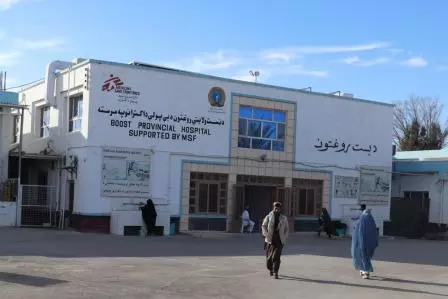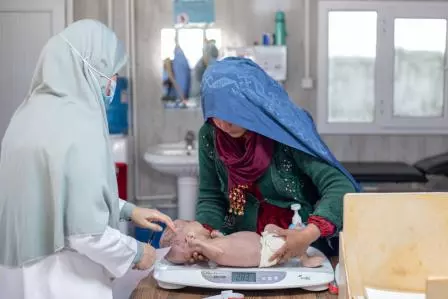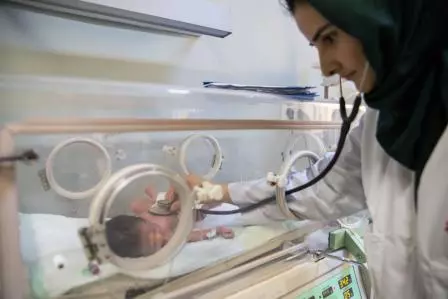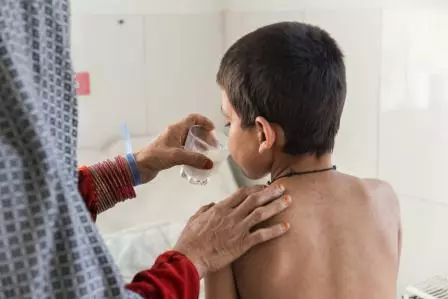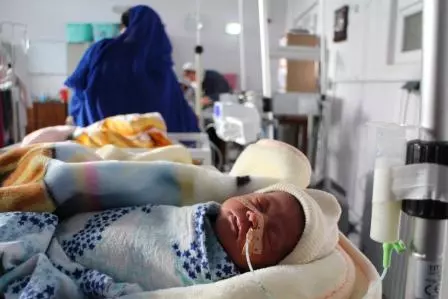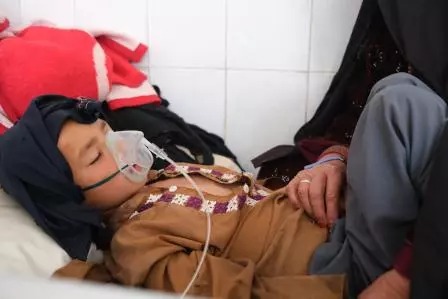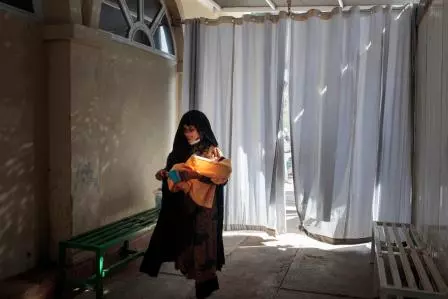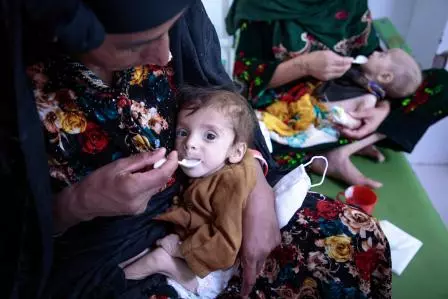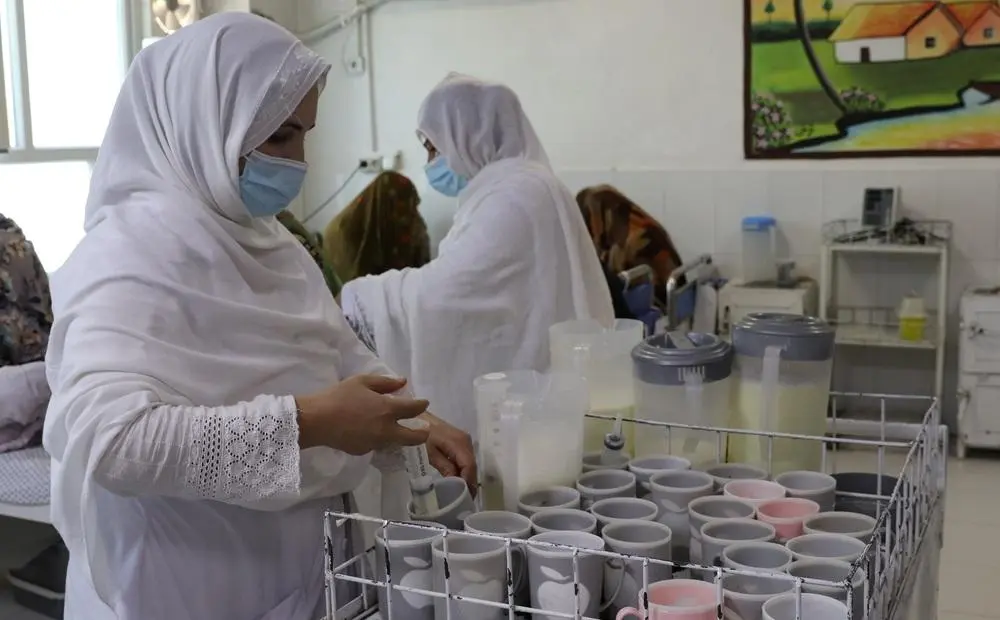
Doctors Without Borders nurses distribute therapeutic milk to the caretakers of children with severe acute malnutrition admitted to the inpatient therapeutic feeding centre at Boost Provincial Hospital in Helmand province. They then support mothers and caregivers in feeding their children and closely monitoring their condition. Afghanistan, 2026 © Shuk Lim Cheung/MSF
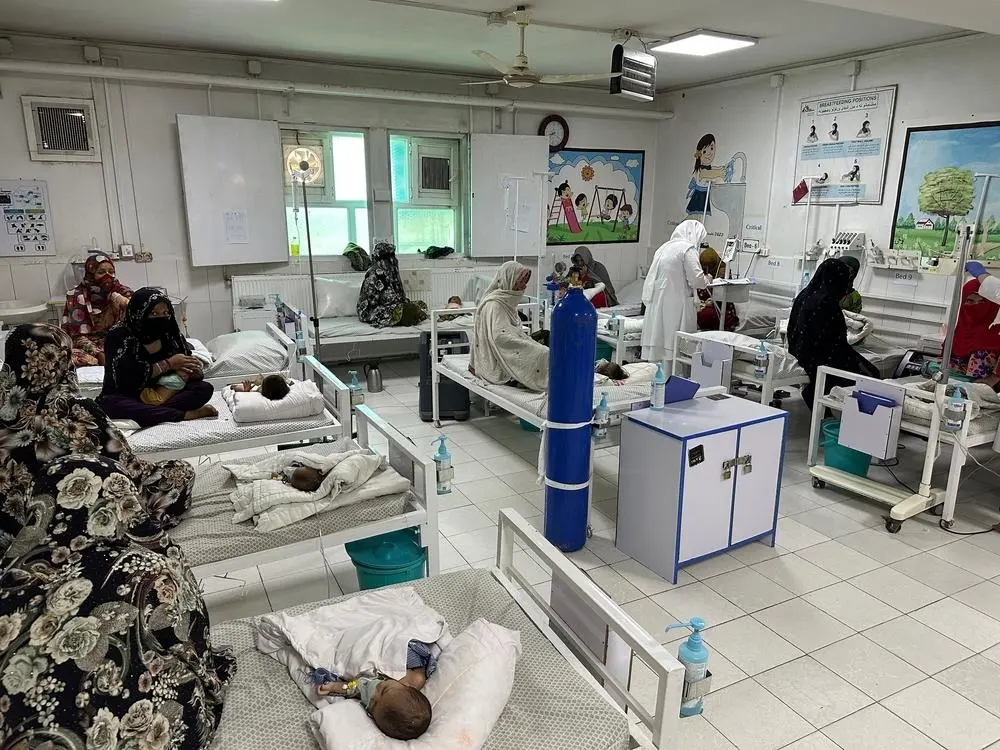
In 2026, 20 additional beds were added to the inpatient therapeutic feeding centre at Boost Provincial Hospital in Helmand province, bringing the total capacity to 57 beds. However, despite this expansion, a recent alarming increase in admissions of children with severe acute malnutrition has challenged Doctors Without Borders' capacity to respond to needs. Afghanistan, 2026 © Shuk Lim Cheung/MSF
Challenging situation
Significant reductions in international funding since early 2025 have led to the suspension or closure of 445 health facilities, including 203 mobile health and nutrition teams in 2025, according to data shared by the World Health Organisation (WHO). These services previously played a key role in community-based screening, early detection, and provision of care.
The situation is further compounded by recurrent droughts, which have reduced crop yields and progressively intensified food insecurity and economic hardship. At the same time, border closures linked to regional geopolitical tensions have disrupted the supply chain of therapeutic food into the country and increased the food prices, undermining its availability and worsening overall access to food for people, particularly affecting pregnant women and mothers.
“Malnutrition is not only a medical issue but also a social issue,” says Banda. “Exclusive breastfeeding during the first six months of life followed by appropriate complementary feeding is essential to meet an infant’s nutritional needs. But when mothers themselves do not have enough to eat, how are they expected to feed their babies? We are seeing many malnourished children less than one year of age, often accompanied by their mothers or caretakers who are also in need of care.”
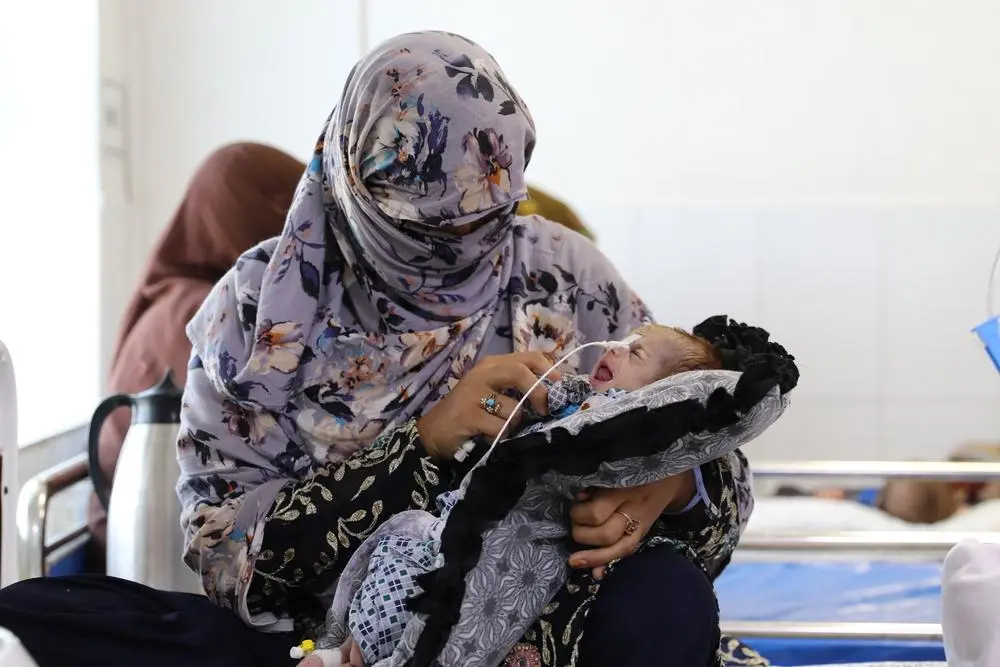
When her one-and-a-half-month-old daughter, Osmania, developed a high fever and difficulty breathing, Islamia sought care from private doctors, but her little girl’s condition did not improve. Osmania was later diagnosed with severe acute malnutrition and admitted to the inpatient therapeutic feeding centre (ITFC) at Boost Provincial Hospital in Helmand. After five days of treatment, she was able to start drinking milk again. Afghanistan, 2026 © Shuk Lim Cheung/MSF
Record-high admissions
Since the beginning of 2026, admissions to the Doctors Without Borders-supported inpatient therapeutic feeding centre (ITFC) at Boost Provincial Hospital in Afghanistan’s southern province of Helmand reached a monthly record-high when compared to the same period over the last five years. Between January and April 2026, admissions of severe acute malnourished children with medical complications were over 1,500 children, which is more than double the number recorded during the same period in 2022.
Between January and April 2026, Doctors Without Borders' ITFC in Kandahar admitted over 570 malnourished children. In addition, more than 300 patients were redirected to other health facilities. The demand for treatment is far greater than what Doctors Without Borders teams can support, even after the increase in our capacity.
Doctors Without Borders has already scaled up its response in Helmand and Kandahar. However, with the seasonal peak in malnutrition now underway, we are deeply concerned that rising needs will continue to outpace the current humanitarian response.
Doctors Without Borders calls on donors, health authorities and relevant organisations to urgently prioritise and restore international and domestic funding for nutrition programmes across Afghanistan. An uninterrupted supply of specially formulated food and essential medical supplies must also be ensured. Without immediate action, the crisis risks worsening, leaving more children without access to the lifesaving care they urgently need.
Doctors Without Borders' activities in Afghanistan
Doctors Without Borders runs seven projects in Bamyan, Helmand, Herat, Mazar-i-Sharif, Kandahar, Khost and Kunduz, with a particular focus on delivering secondary healthcare services. Currently, Doctors Without Borders is providing nutritional support for malnourished children in Helmand, Herat and Kandahar provinces. In 2025, 9,388 children were admitted to Doctors Without Borders-supported inpatient therapeutic feeding centres, and 3,166 children were enrolled in outpatient therapeutic feeding centres.
Will you support our work?
Help us provide lifesaving medical care by making a donation today.