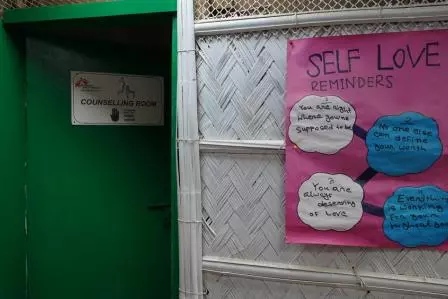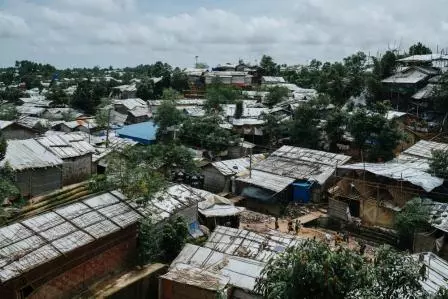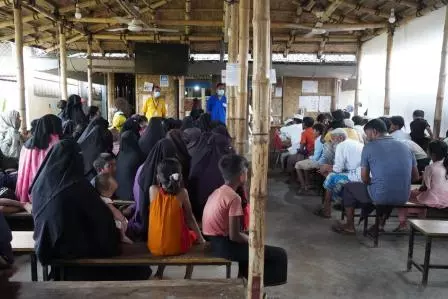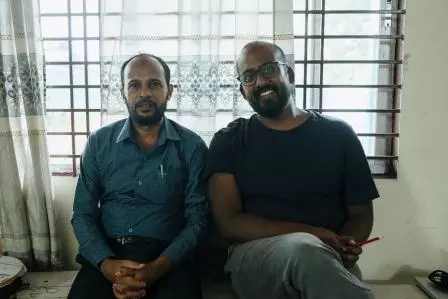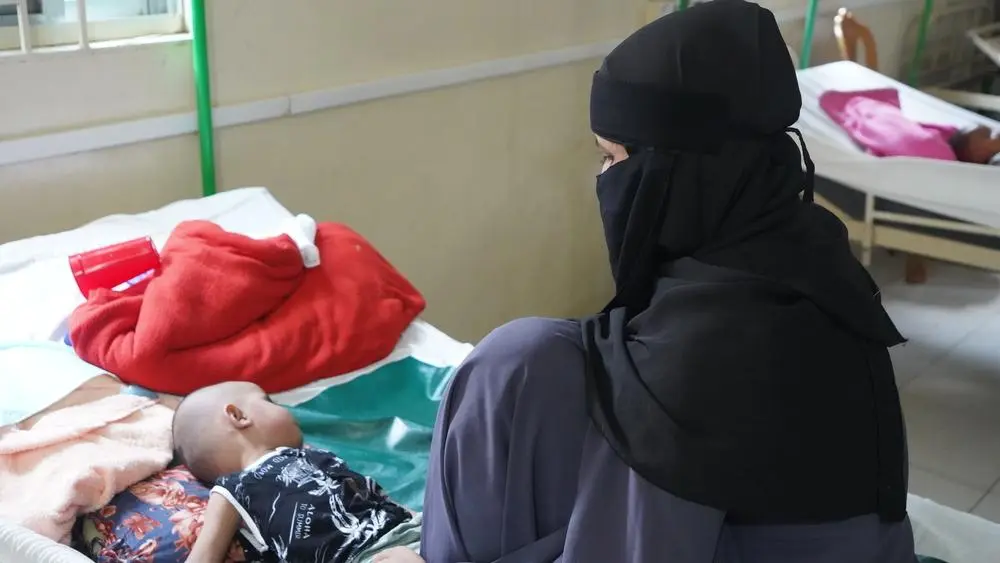
Rohima*, a 24-year-old Rohingya refugee, has lived in the refugee camps in Cox’s Bazar since fleeing violence in Myanmar in 2017. Now a mother of four, she faces mounting challenges as humanitarian assistance was reduced to $10 per person. Bangladesh, 2026 © Farah Tanjee/MSF (*name changed)
“We can no longer make ends meet. I have to make impossible choices.”
My name is Rohima*. I am 24 years old. It has been almost nine years since we first came to Bangladesh, fleeing the violence, shootings, and fighting in Myanmar back in 2017. Immediately after crossing, I had to be taken to Cox's Bazar for medical treatment, and it took me a month to recover.
When we first arrived, the government provided $12 per person. Over the years, our family has grown to six members: my husband, our four children, and myself. Now that our family is large, the amount of aid has decreased to $10, and we can no longer make ends meet. With the $10 allowance, the rations we receive, they only last for 15 days. To manage, I have to make impossible choices. Since the reduction, I have stopped taking my full share of rice just so I can bring home other essentials like eggs, chicken, oil, and flour for my small, sick children.**
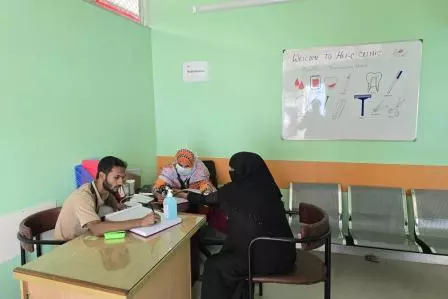
My husband is very sick and cannot do any heavy labor. He was injured playing football back in Burma, and he suffers from constant, unyielding body aches, chest pain, muscle pain, and swollen legs. On top of that, our children frequently get sick. I am currently at the Doctors Without Borders/Médecins Sans Frontières (MSF) clinic because my young son had a fever so intense that he couldn’t move. The doctors admitted him and explained it stems from a tonsil issue.
Because we lack money, I cannot take my husband to the doctor frequently. To survive the 15 days of the month that the rations don't cover, he sits at a shop and earns a small income working for someone else. We also buy a few extra items to resell.
I am grateful to the Bangladesh government for giving us shelter, but this current food assistance—where some receive $7 and others receive $10—is causing severe hardship. Both my mother and my mother-in-law are now receiving only $7 each, and they are suffering greatly. Thinking about the peace we've lost, our constant sickness, and the impossible burden of surviving without an income leaves me completely overwhelmed with despair.
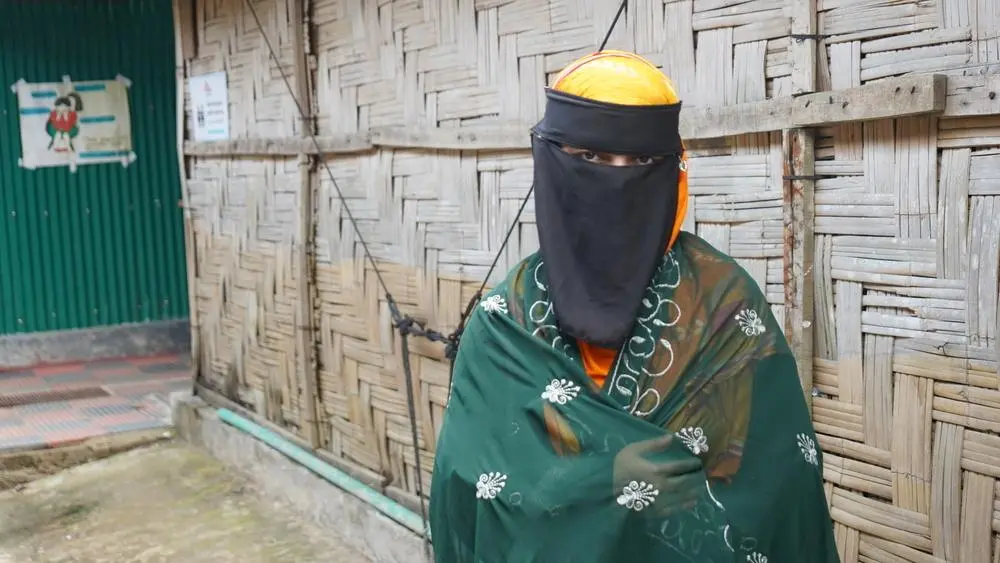
Sadeka is a 30-year-old Rohingya refugee who has lived in the refugee camps in Cox’s Bazar for nearly nine years. As a mother of six, she manages the daily survival of a nine-member household under the strain of significantly reduced humanitarian assistance. Since rations were cut to minimum $7 per person, her family’s diet has become increasingly restricted. Bangladesh, 2026 © Farah Tanjee/MSF
“This environment of hunger and confinement is taking a toll on my children.”
I am Sadeka. I am 30 years old. For almost nine years now, Bangladesh has been our home. My family is large- there are nine of us living in one house: my husband, my brother-in-law, our six children, and myself.
Currently, we receive just 7 dollars per person each month. Before April, we used to get 12 dollars. When we received 12 dollars, the money was enough to bring home a variety of food—chili, oil, turmeric, sugar, lentils, and salt. Since the ration dropped to 7 dollars, the money simply isn't sufficient. If I want to get the full variety of rations, the money runs out immediately. Now, we eat rice three times a day. A typical day's food consists of dried fish with rice in the morning, some greens at lunch, and just one curry with rice at night.
To make matters worse, the authorities reduced our ration amount specifically because we have 18-year-olds in the family. They consider them "able-bodied." But we have no right to work. My grown boys cannot do any work inside the camp, nor are they allowed to go outside to find a job. If they are considered able-bodied but are barred from working, what are they supposed to do when our rations are cut? My husband has no steady income either; he only occasionally gets daily labour work with other organisations, maybe once a month, or for 10 days every two or three months.
This environment of hunger and confinement is taking a toll on my children. All four of my sons have studied, but they see no future here. They ask me, "What will we do staying in the camp? We can't do any work here. What's the point of staying?"
It feels terrible just thinking about our situation. Right now, I am at the hospital because my 1-year-old daughter has breathing difficulties and a cough. She is so small, and it is impossible to manage nutritious food for her every day. Living like this since coming from our own country causes me so much pain. Not getting enough rations is one constant unrest. Then, watching my children try to leave because they see no way to survive here is another unrest. They don't know anything else, they can't do anything, and we are living with great hardship.
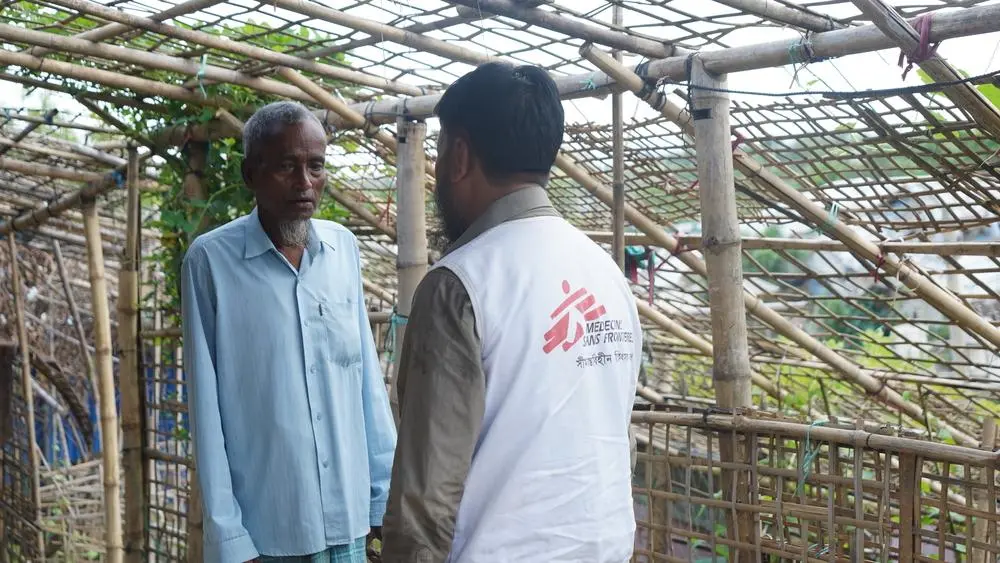
Norul Amin, 66, is a Rohingya refugee living in the world’s largest refugee settlement in Cox’s Bazar, Bangladesh. As of June 2026, he manages the daily survival of his family of nine amidst severe food insecurity. Bangladesh, 2026 © Farah Tanjee/MSF
"If you can't eat, everything feels chaotic. Now, peace just means being able to eat and survive."
My name is Norul Amin. I am 66 years old. We came here from Myanmar after enduring immense suffering. In Myanmar, we had everything—22 kani (about 8.8 acres) of land, an earthen house, and livestock. On a morning in 2017, we were forced to flee our homes. After traversing many difficult paths, we finally reached Bangladesh. It is a blessing that Bangladesh gave us shelter and food aid, which allowed us to survive.
However, I am currently receiving only $7 per person as food assistance. This reduction has put us in a very difficult position. There are six members in my family—my wife, my two sons, and my two daughters. On top of that, my eldest son suffers from mental health issues. My 17-year-old daughter has lost her ability to speak.
Despite my physical limitations, I walked to the relevant authorities' office using a cane to explain our situation. I informed them that since I have two family members with disabilities, we should be eligible for additional financial assistance. However, they couldn't help me directly. They only took down our information and stated that this falls under the UN's jurisdiction, and that they can only increase the aid once an order is issued from there.
Since the aid was reduced to $7, we get almost nothing. Now, I wake up in the morning and just have a cup of hot water, and then it’s almost like fasting for the rest of the day. During the mango season, we gather raw mangoes to make Amer Kazi, burn a few chilies, and pick some wild greens to cook. This is how we are getting by. If your stomach is at peace, the world is at peace, right? But if you can't eat, everything feels chaotic. Now, peace just means being able to eat and survive.
In this situation, I feel utterly miserable and restless. If I could go back to Burma right now, I would. If the environment there becomes safe, we will definitely return. There, we wouldn't have to buy fish. We could eat vegetables grown on our own land. I know I won't get my livestock back, but perhaps I would at least get my land back. I can't sleep at night when I think of Myanmar; I miss my homeland so much.
*name changed
**For a developing child, a simple mix of rice and lentils (khichuri) combined with eggs isn't just a traditional meal—it provides the complete essential proteins and micronutrients required for brain development and immune system recovery. When rations are cut to $7, these vital protein sources are often the first to disappear from a family's table.