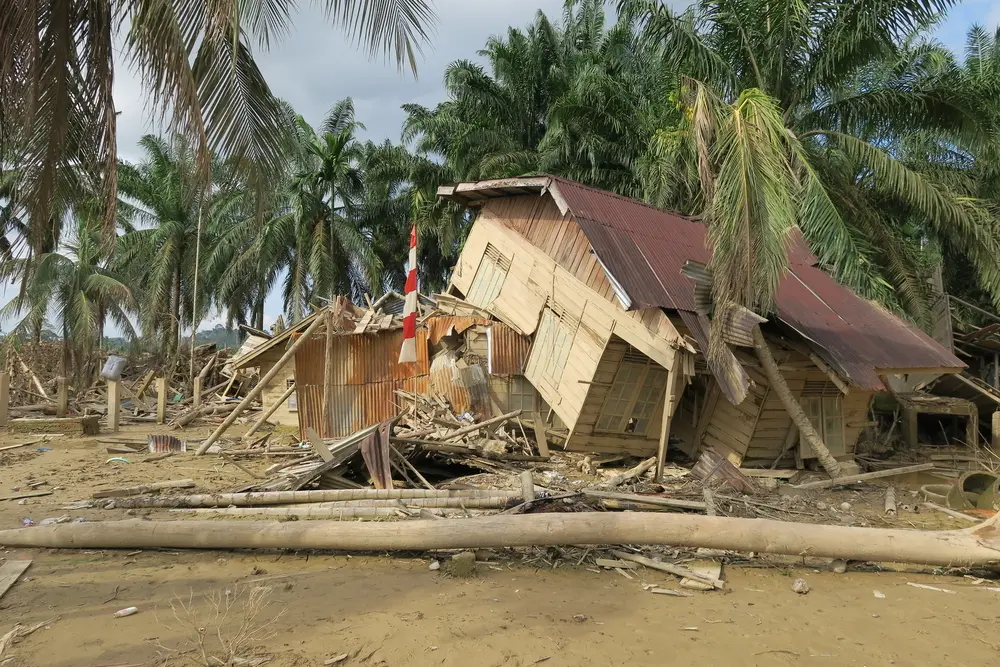
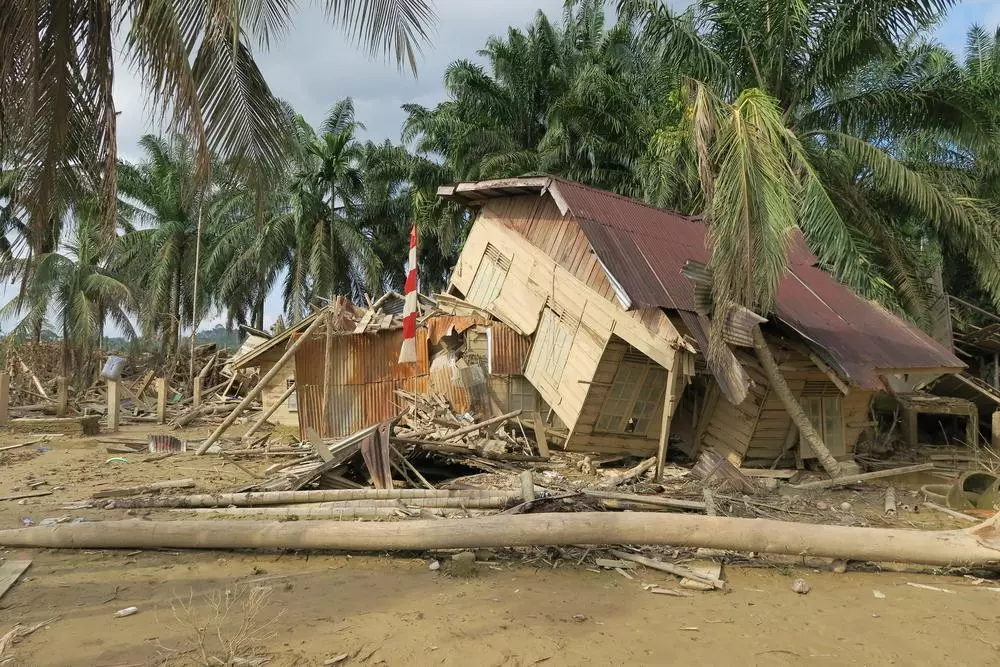
A damaged house swept away by the floods in a village in Aceh Tamiang district. Indonesia, January 2026. © Sania Elizabeth/MSF
Donate to Doctors Without Borders
Your gift brings lifesaving medical care to people who need it most

Free gift with monthly donations
Sign-up for a monthly donation today and we’ll send you a free cap!











At the end of November 2025, Tropical Cyclone Senyar triggered extreme rainfall, that caused devastating floods in three provinces in Indonesia: Aceh, North Sumatra, and West Sumatra. As of 14 January 2026, official figures recorded more than 1,000 deaths and over 130,000 people displaced in the three provinces.
Through darkness and mud
Doctors Without Borders/Médecins Sans Frontières (MSF) arrived in Aceh Tamiang on 5 December 2025. Ivan Sinaga, the Head of Mission in Indonesia, recalled the conditions at the time, “The city was dark because there was no electricity and there’s no mobile coverage. It was basically covered in thick mud.” Seventeen out of 19 health facilities, including 12 primary healthcare centres in Aceh Tamiang, were no longer functional after floods receded and heavy mud covered it.
Syahri, a community member involved in the coordination of relief distribution in Pengidam Village, recounted how quickly the water rose, reaching the height of 11 meters on the night of 26 November 2025. “We didn’t have any boat, so we used tires and jerrycans to evacuate to the higher ground in panic and darkness.” He added, “The flood receded two days later, leaving behind destroyed homes and mud. The mud even covered rooftops.”
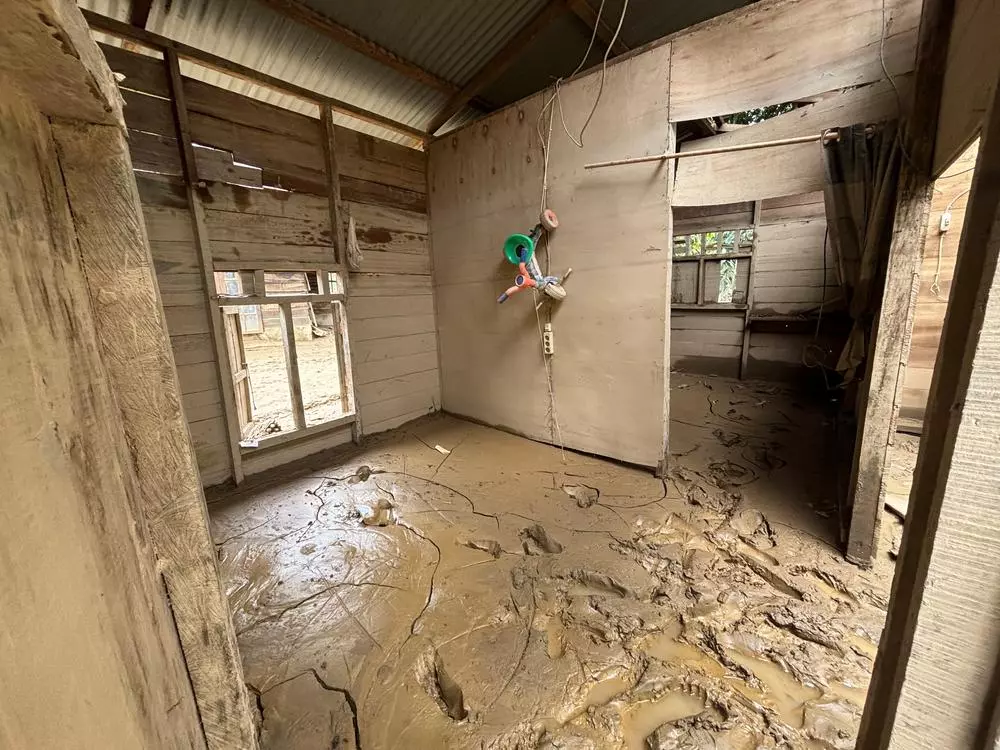
Inside a damaged house in the aftermath of the devastating floods in Aceh. The floods left behind debris and thick mud that submerged homes and buildings. Indonesia, December 2026. © Ivan Sinaga/MSF
Scaling up services in times of emergency
Although the flood had receded, Doctors Without Borders sustained and scaled up its response operations until the end of January 2026:
- Mobile clinic: The team has treated 2,430 patients in eight subdistricts in Aceh Tamiang and one subdistrict in Aceh Timur. Top three cases are upper respiratory tract infection, generalised pain and aches, and chronic hypertension.
- Access to hard-to-reach areas: The team had to travel by boat for five hours, and even camped overnight on site, to reach hard-to-reach villages in Aceh Timur, such as Batu Sumbang and Pante Kera.
- Measles vaccinations: Responding to the confirmed measles case following the flood, Doctors Without Borders team worked with the District Health Office (DHO) to support the measles vaccination campaign from 5 January until 24 January 2026, reaching 283 children.
- Mental health: Mental health and psychosocial support services are integrated into the mobile clinic, reaching 429 people to help them cope with their trauma due to the disaster.
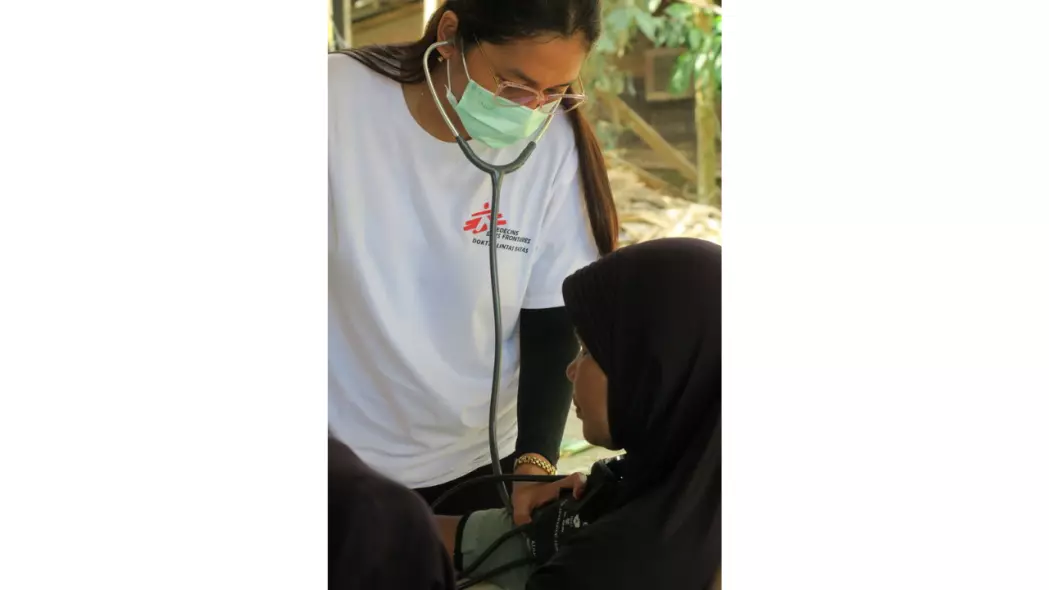
A Doctors Without Borders medical staff member checks a patient’s blood pressure during a mobile clinic activity in Pengidam Village, Aceh Tamiang district. Indonesia, January 2026. © Sania Elizabeth/MSF
Addressing mud and sanitation challenges
Another major problem emerged as the flood receded: mud up to one-meter-thick burying homes and public facilities.
- Facility rehabilitation: Doctors Without Borders’ water and sanitation team supported cleanup and reactivation of two primary healthcare centres, Manyak Payed and Sekerak, to restore services for patients.
- Non-food items distribution: Doctors Without Borders has distributed over 4,000 relief packages, including hygiene kits, cleanup tools, cooking set, and materials to build emergency latrines.
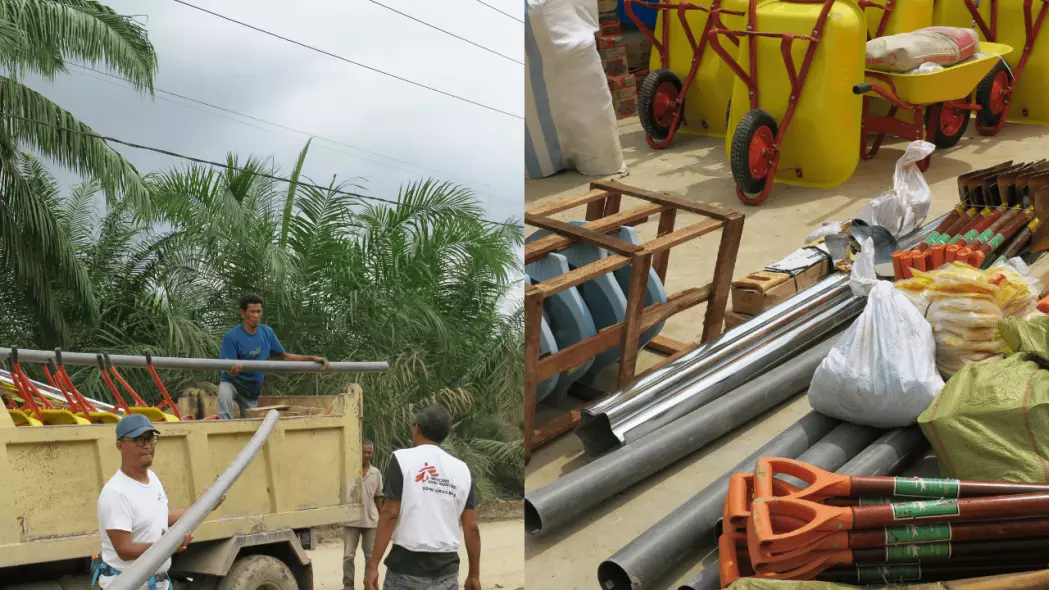
Doctors Without Borders distributed cleanup kits and emergency latrine materials in Pengidam village following the floods in Aceh. Indonesia, January 2026. © Sania Elizabeth/MSF
Strengthening local coordination
Aside from direct medical services, Doctors Without Borders also supported the operation of the Health Emergency Operation Centre (HEOC) under the DHO of Aceh Tamiang. These include the supply of power sources (generators), internet connectivity, as well as operational support and data collection.
“The rehabilitation and cleanup efforts by Doctors Without Borders empowered the local community, enabling health centres to operate independently and resume providing services on their own,” said Dr. Mustakim, Head of HEOC/Head of Aceh Tamiang DHO.
Will you support our work?
Help us provide lifesaving medical care by making a donation today.