Doctors Without Borders is responding to deadly earthquake in Afghanistan
Just before midnight local time on 31 August 2025, a 6.0-magnitude earthquake struck Afghanistan’s Nangarhar province near the Pakistan border. Local sources report more than 1,400 people killed and more than 3,000 injured across four eastern provinces, including Kunar and Nangarhar.
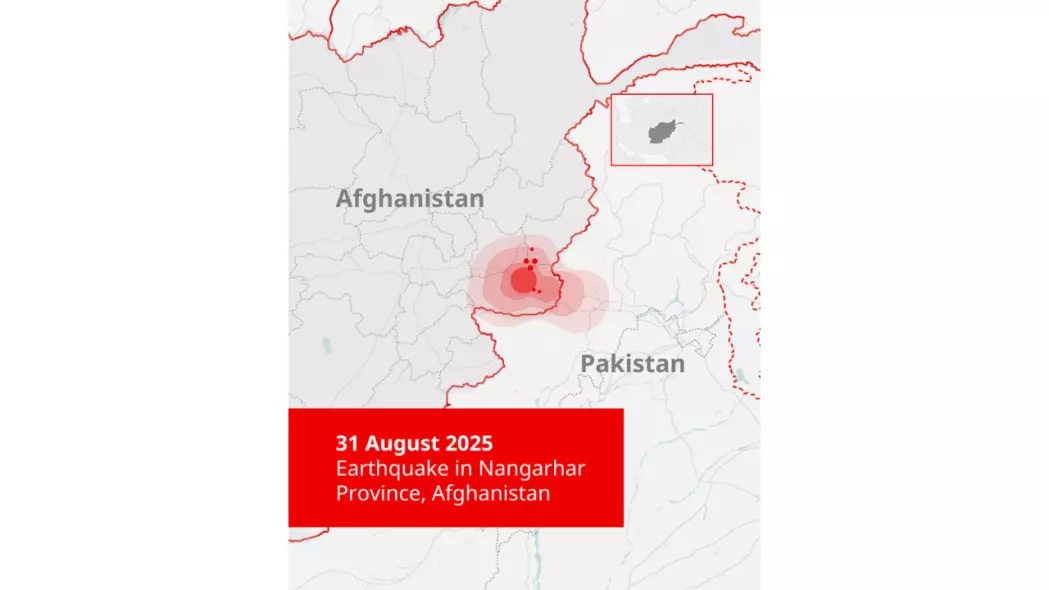
Map showing the epicentre of the 6.0-magnitude earthquake in Afghanistan, August 2025

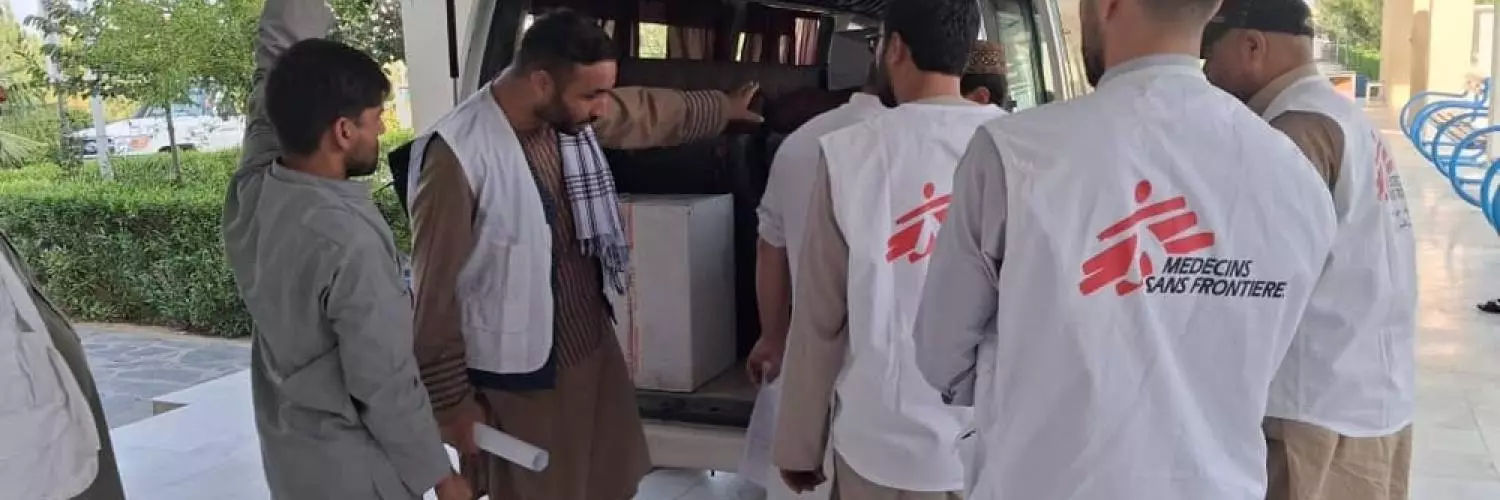
Doctors Without Borders team in Afghanistan conducted an assessment and delivered emergency donations to Nangarhar Regional Hospital in Jalalabad following the earthquake that struck on 31 August 2025. Afghanistan, 2025. © Ahmadullah Safi/MSF
Doctors Without Borders assessed needs and distributed emergency kits in Jalalabad
On Tuesday 2 September 2025, a Doctors Without Borders team reached Jalalabad, a city close to the epicentre, which has become a hub of the emergency response.
The team went there to assess the needs in the affected area to prepare for a potential medical intervention. Our colleagues visited the regional hospital in Jalalabad, where more than a hundred people injured in the earthquake have received surgery, and where around 600 patients have been admitted so far. The hospital was already full before the earthquake, and health workers are working at full capacity with lack of supplies. We distributed emergency kits and are planning to visit other affected areas to potentially offer support.
Doctors Without Borders is ready to collaborate with local authorities and health organizations present there. We will soon have better visibility on how we can best provide care to communities in Nangarhar, Kunar and Laghman provinces.
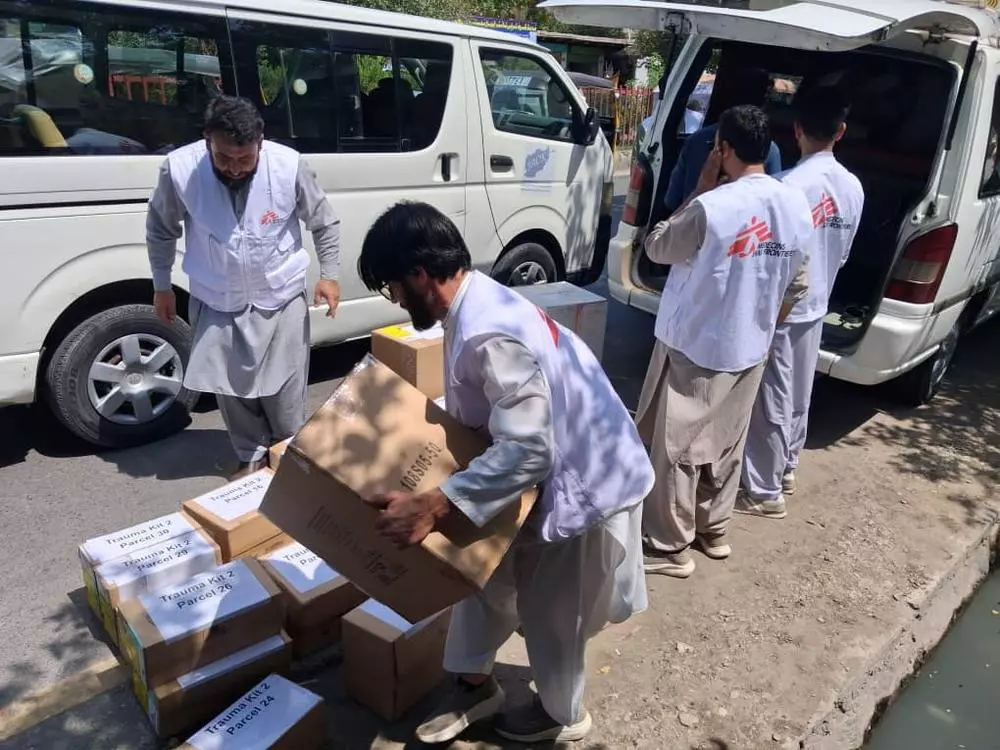
Doctors Without Borders team in Afghanistan conducted an assessment and delivered emergency donations to the affected areas following the earthquake that struck on 31 August 2025. Afghanistan, 2025. © Ahmadullah Safi/MSF
Doctors Without Borders is providing support in Kuhar province
After the earthquake and aftershocks that struck Afghanistan’s eastern provinces of Kunar and Nangahar between 31 August and 4 September, around half a million people are in need of urgent health assistance, according to the UN.
Doctors Without Borders is providing medical support in Patang camp, Kunar province, where around 1,000 affected families are being relocated. Medical teams are carrying out outpatient consultations, including wound dressing, outbreak prevention, routine vaccination, women’s health and mental health. In addition, Doctors Without Borders teams distributed 10 small water tanks with a capacity of around 3,000 litres per tank to the displaced population in Zerai Baba camp and installed 10 latrines.
“We treated patients while our teams continued building the clinic, mostly for fever and wound care. In the camp the weather is very hot, and you can see hundreds of tents, with people who keep coming in, we do our best to provide support,” said Ghausuddin Sabir, Doctors Without Borders emergency nurse.
Affected communities are still traumatised, processing the loss of their homes and loved ones, and in need of basic items such as clothes, hygiene kits and shelter. They need protection, especially children, some of whom lost their entire families.
Doctors Without Borders' activities in Patang camp
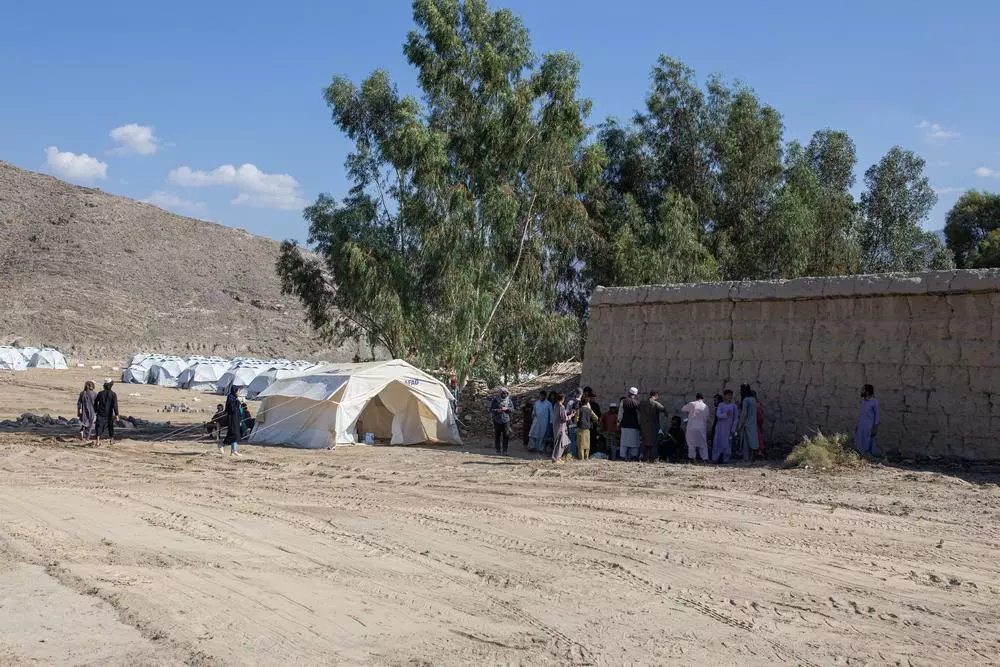
Doctors Without Borders' first day of medical support in Patang displacement camp. Afghanistan 2025 © Alexandre Marcou/MSF
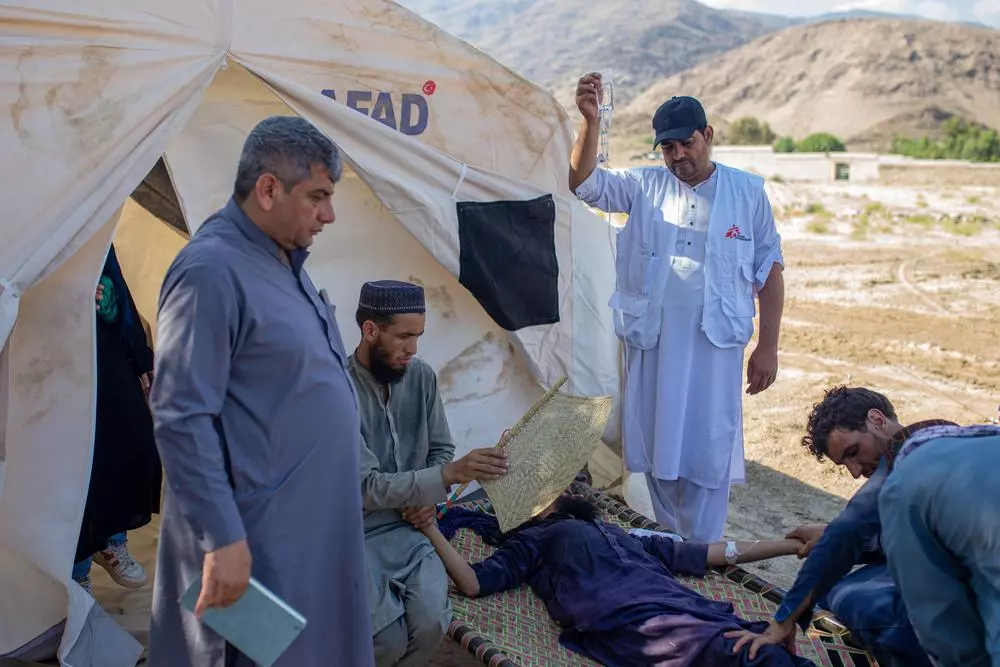
A patient from Patang displacement camp arrived at the clinic with a high fever in generally bad condition. After his condition was stabilised he was referred to a hospital in Kunar province. Afghanistan 2025 © Alexandre Marcou/MSF
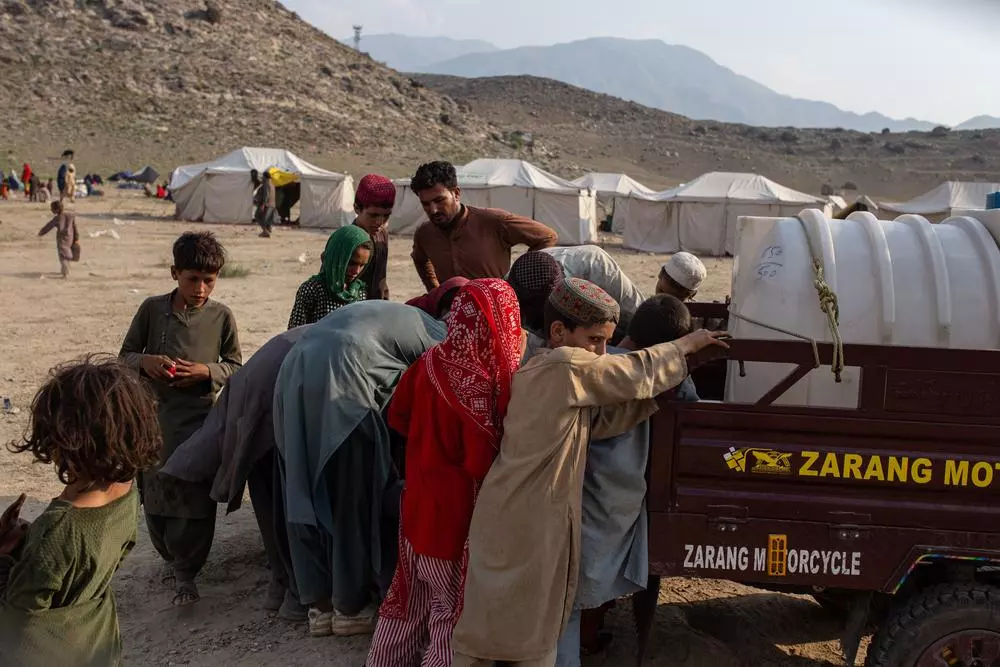
Doctors Without Borders teams distributed 10 small water tanks with around 3,000 litres capacity per tank to the displaced population in Zerai Baba camp. 10 latrines were also installed. People did not have containers to store water and used plastic bottles of water to fill them and drink from there. Afghanistan 2025 © Tasal Khogyani/MSF
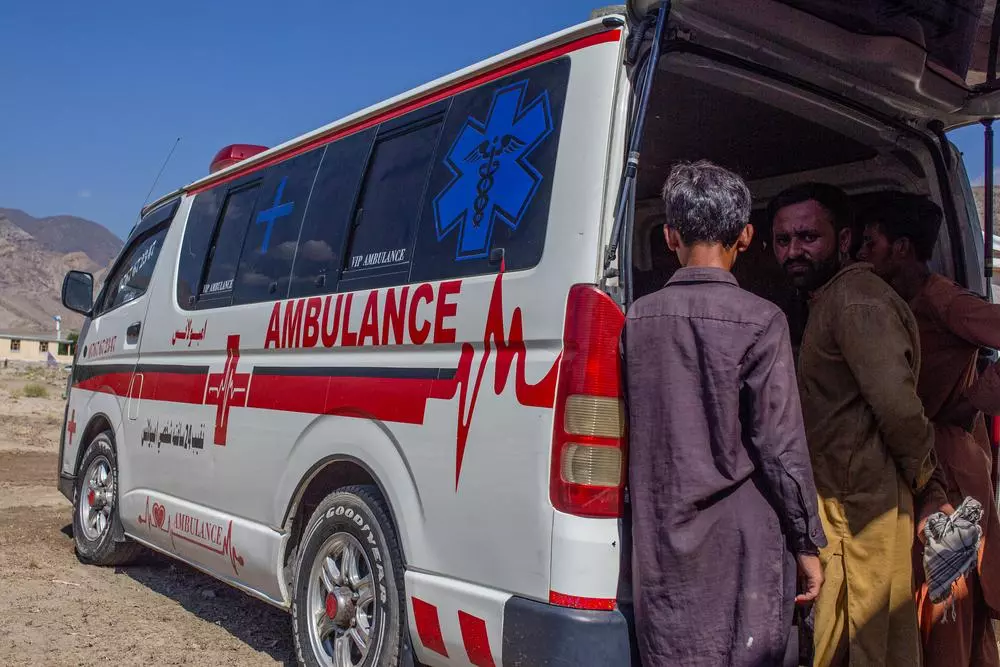
The ambulance serves as a pharmacy until the container and tents are set up. It can also be used to refer patients to the neighbouring hospitals of Kunar and Nangahar provinces. Afghanistan 2025 © Alexandre Marcou/MSF
An urgent assessment is needed to determine the full scale of the humanitarian crisis
It is difficult to assess at this stage, but such an earthquake in a hard-to-reach area has already resulted in a devastating human toll. Hospitals keep receiving patients who have mainly sustained trauma injuries, but many bodies remain under the rubble according to local sources. We fear the spread of diseases resulting from lack of basic hygiene, since access to clean water can become very challenging. The destruction of infrastructure has an impact on survivors’ living conditions, which is going to further exacerbate their needs.
While the full extent of the damage and needs is still being evaluated, there is no doubt that an urgent response from humanitarian and health actors is needed to provide assistance to the affected populations.
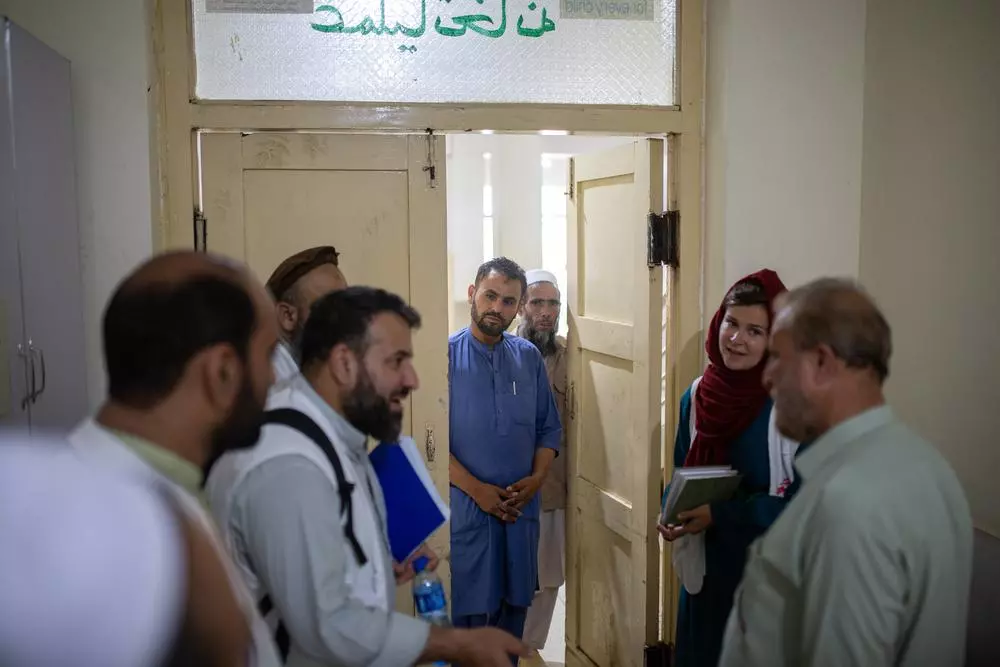
Doctors Without Borders teams carried out assessments in several hospitals and medical facilities across Nangahar and Kunar provinces where they distributed trauma and emergency kits. In Kama District Hospital, located 20km east from Jalalabad, Nangahar’s province capital, medical team assessed if there were any needs to support the hospital and distributed a trauma kit. Afghanistan 2025 © Alexandre Marcou/MSF
Was Doctors Without Borders already present in the areas affected by the earthquake?
Doctors Without Borders has no medical activities running in the areas most affected by the earthquake. Since we have no presence in Kunar province, it is difficult for us to have any clear visibility of the situation in the area where most of the damage occurred.
Currently, there are three main hospitals that are responding to the emergency: Nangarhar regional hospital, Kunar provincial hospital and Laghman provincial hospital. Health organizations from the UN and humanitarian organisations started providing support.
Will you support our emergency response work?
Help us provide lifesaving medical care during emergencies by making a donation today.